All Activity
Past hour
-
Thanks Mark. Hopefully I've converted you to Koechlin! Many of his pieces can be found on You Tube, as well as an interesting documentary about his life and works.
Yesterday
-
Hi @MJFOBOE ! This piece was not written by Alex, but by @gmm .
-
A lovely pleasant piece of music. Remember woodwind players need to Breathe! Why the Oboe D'amore? Not many players own one. Why not substitute English Horn? I also think in this composition the tone would be more fitting. Mark
-
Schizophrenia is a terrible illness, but of course many people recover and do very well and function very well. I hope your health is good. I am actually writing a piano piece about Schizophrenia at the moment, which is about 90% completed. I will try to share it on this website when it's done. Your Andante sounds really good :) Mental illness is absolutely a difficult topic, so my hope is that by using music, there are some things that can be communicated that words cannot.
-
Hi I listen to the original piano work; although your orchestration is full of color and is well thought out and quite enjoyable. The orchestra version from my mind when compared to the piano is not as ethereal/light or distinct as the original piano version in feel. I guess orchestrating from piano is not easy at all. Mark
-
Once again very nice sounding work ....
-
Alex, this is a lovely work. My only observation/suggestion is all the doubling in the woodwinds. When playing with multiple persons tuning the octaves among the players takes a bit finesse. Mark
-
I am not familiar with examples in any genre of music that deals specifically with this subject - and it's sort of a difficult topic too. I myself have mental illness and wrote my Andante for Strings while I was developing Schizophrenia.
-
-
PeterthePapercomPoser replied to PeterthePapercomPoser's topic in Music Appreciation: Suggest Works or ArticlesKirby Super Star - Cocoa Cave:
-
Hello Peter! @PeterthePapercomPoser . I am doing exactly what Henry did 3 years ago! (nice) I would first like to provide a description on 'Gavotte'. I have written this myself. 'Gavotte' is a French dance that originates from the word 'Gavot', a folk dance. just like the Polonaise from Poland, or the 英歌 from China. Gavottes are usually in duple or quadruple time. Some of my favourite Gavottes are: Saint Saens Gavotte in C Moll Cecile Chaminade Gavotte in A Moll Johann Sebastian Bach Gavotte from French Suite No.3 in B Moll. That was my description of the 'Gavotte' as a dance, overall, as well as my favourite picks. The following will be a loose analysis of your piece. <Not done yet!!!>
-
Hello everyone, I've been trying to look out for depictions of mental illness in music. I asked ChatGPT and the response was a bit underwhelming. There is always speculation and sometimes confirmed facts about composers with mental illness, which is interesting to consider, but not precisely what I am trying to find. Does anyone have any recommendations for this sort of stuff? Context: I am trying (and have already written) solo piano pieces trying to capture the essence of various mental illnesses. Genre doesn't really matter. I found some more popular pop-like music that moreso deals with people's lived experience of mental illness. I mean that's cool too, sort of getting warmer. But mostly looking for music attempting describing the illness through the music (not necessarily through the lyrics), if that makes sense. Things like depression/bipolar/ADHD/anxiety/schizophrenia/addictions etc. Hopefully someone can recommend something, thanks in advance :)
-
Hello, Sometimes the problem with writing so much music is that it takes so long to listen to it all. I have been listening to the your pieces gradually in the last few weeks while at work to try to take it all in. I think others have made more specific comments, I'll just say a few things about overall impressions. Maybe there are more thoughts after...but I think when you've created something like this - it sort of takes on a life of it's own. I mean from the most fundamental level, I find your music interesting to listen to and I enjoyed listening to it multiple times. So in that regard, from a subjective perspective, I am a fan. I dig your style. The opening notes from your first prelude sort of says: This is Classical music, but the chords are gonna be a little spicy at times. Which is great. Listening to your music feels familiar enough for me, but also exciting enough through the nice harmonies and ideas you got going on. It's clear that you have put a lot of thought into it all. The pacing works great. I'm thinking that the 10 pieces need to be played in this order. So the second thought is...can you actually play these compositions yourself? It gets very virtuosic at points. I would absolutely love to hear a recorded version of yourself playing it. I think there is only so much that comes through in these simulated recordings. The third thought is that you clear have a style that shows through. Prelude 5 goes a bit off on a tangent stylistically from my ears, but I mean I think I hear a distinct "SergeOfArniVillage" style if that makes sense. My favorite is probably Prelude 7. The right hand accompaniment that you do throughout is so nice. Really tickles the right places in my brain, if that makes sense. While you have the "loud" songs and the "soft" songs. I think I prefer the more quite and contemplative ones. I also enjoyed Prelude 9 very much. Probably my second favorite. I'm a big fan of adding descriptive titles to your pieces. I totally get if that's not your thing, but it would be so amazing to hear your own thoughts on what inspired you and what you were sort of going for when writing these pieces.
-
I recently showed a draft of a piece I was working on to one of my friends. With the piece being in 13/8, which has multiple ways of grouping, I decided to write the time signature out as (3+2+3+3+2)/8 instead of simply putting 13/8. My intention here was to make it easier to interpret and learn, but I was told my choice made it more confusing. Would it be better to notate it as an alternating pattern of 8/8 (or 4/4) and 5/8? Or simply 13/8? Or is there some other solution that I haven't considered?
-
Hello @Luis Hernández, I’m glad this topic was brought up for discussion! It may be useful to distinguish a few senses in which the term can be understood. First, neoclassicism can be understood in an inclusive sense—as the employment of stylistic traits of classicism within a new or later context. In this sense, works composed before the 1920s could be considered "neoclassical", such as Saint-Saëns’s wonderful Septet in E-flat major (1880) or Grieg’s Holberg Suite (1884), as well as works being written today. In this context, "neoclassicism" is used in a similar way to descriptors like "neo-romanticism" or "post-impressionism" (both of which, arguably, can be understood in a more limited way as well). There is, of course, a difference between this broad assimilation of classical elements and the seeming "distortion" of them that we often observe in Stravinsky or Hindemith. Perhaps it’s in this latter sense that you speak of "Neoclassicism" as a specific historical style and era. Yet Stravinsky and Hindemith didn’t view what they were doing as "distorting" classicism, but rather as continuing it—perhaps as a reaction against the saturation and monumentality of much German Romanticism. Stravinsky himself, the composer most closely associated with this movement, famously stated: "Neoclassicism? A label that means nothing whatever." In fact, almost all of the composers tied to Neoclassicism wanted nothing to do with the term. So while I think it’s a bit pointless to fret over the "correct" use of labels in art, I feel justified in using the term in its more inclusive sense. For me, it’s a helpful tool to describe music that is influenced by the Western art music of the 16th–18th centuries, approached from a modern perspective with varying levels of reverence for classical norms. I don’t think those who use the term in a narrower sense are necessarily more "correct" (though I do take issue with using the descriptor for mainstream 'peaceful piano' music—but that’s another story best left for another time!). Some works I love that I could be considered neoclassical, albeit in different ways:
-
Like the classical style (period). Neo-classicalism returns the stylistics methods of the 18th century. We can use Stavinsky as great example. His earlier works were not composed in modern idioms, but reflective of how Beethoven wrote. Symphony of the Psalms is much like chorale symphony by Beethoven. I would include his ballet "the firebird" in the same way Russian ballets are written in the 19th century. It is his "Rite of spring" that is more dissonant and not "classical". When it comes to form, think sonata form and pieces that Bach wrote.
-
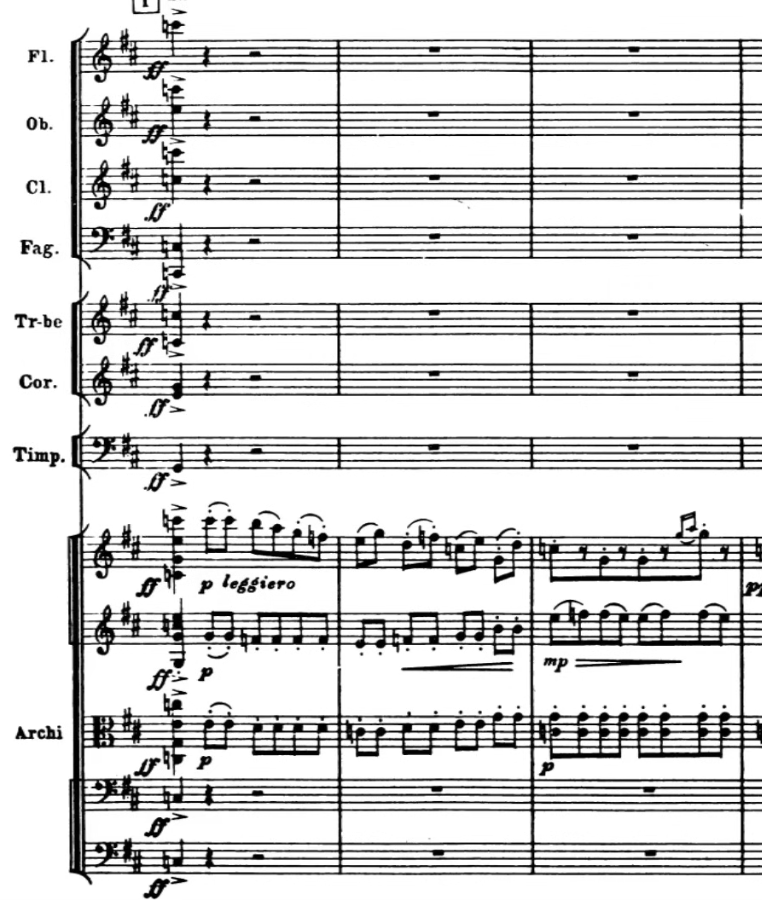
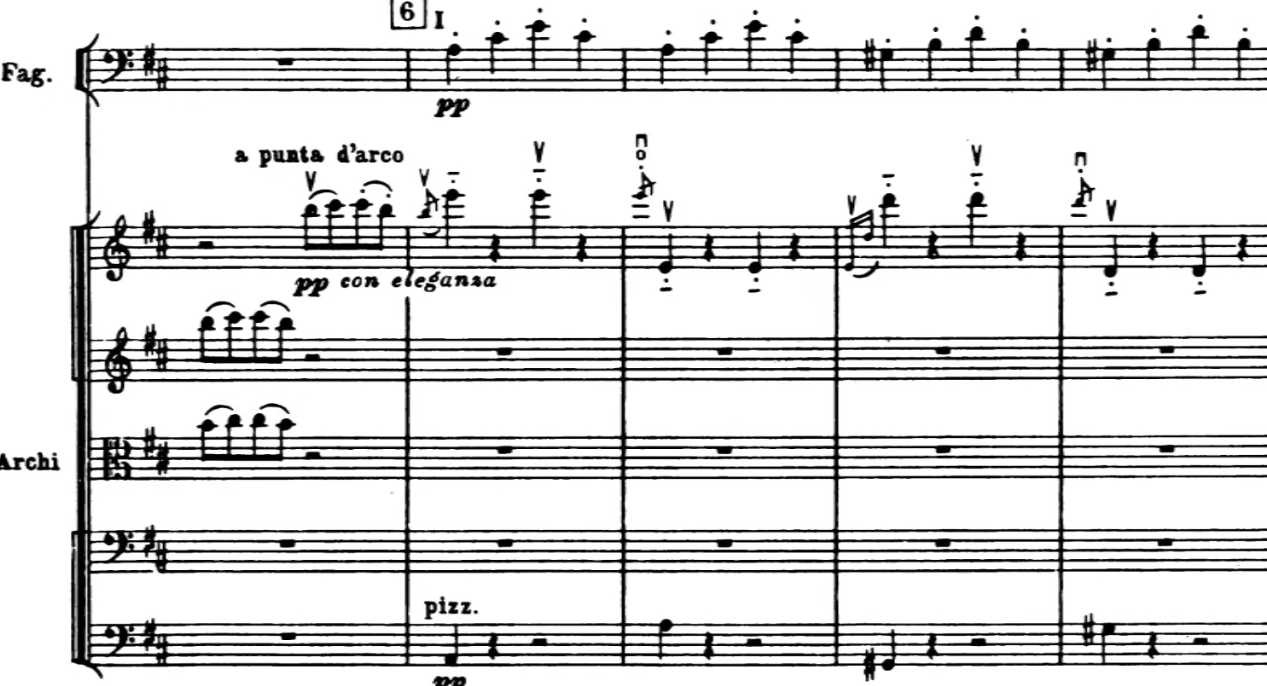
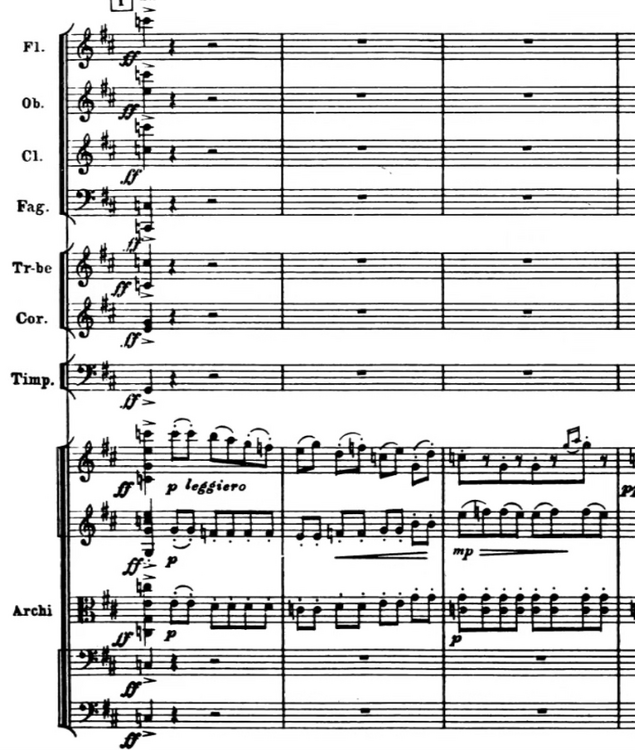
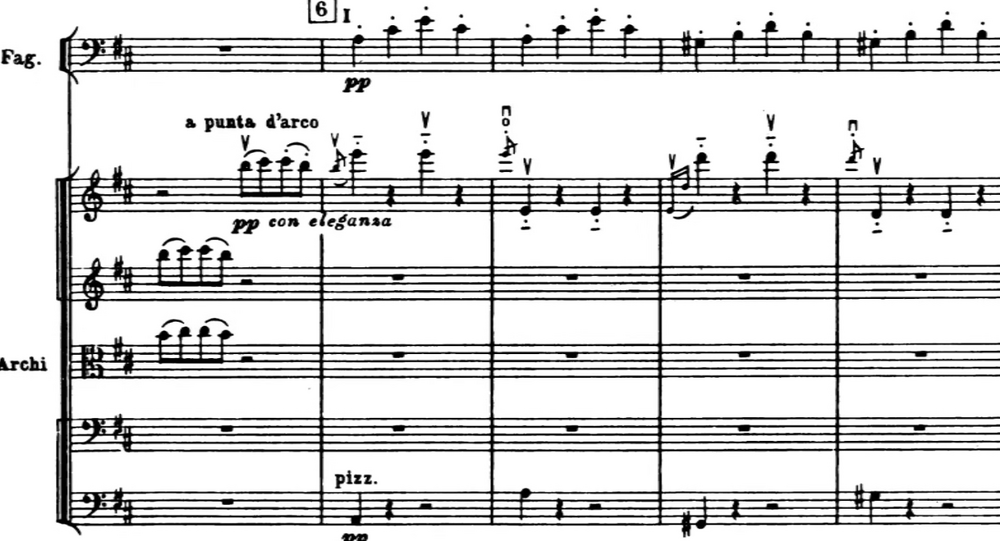
@PeterthePapercomPoser That’s true, you’ve highlighted some of the interesting aspects of the style. This symphony is marvellous and very subtle. We could give other, much more ‘intense’ examples. If we don’t pay close attention, this sounds like ‘Mozart’, doesn’t it? But, for example, coming from D major, in bar 11, there’s a sudden (unprepared) modulation to C major. That wouldn’t happen in the Classical period. Another example is those tremendous leaps in the first violins a little further on.
-
Perhaps my favorite "Neoclassical" work is Prokofiev's 1st Symphony - labeled as "Classical". With it's Gavotte instead of a Minuet, it clearly derives it's stylistic and formal ideas from the Baroque period but in a way that is more tongue-in-cheek. A characteristic of this symphony is its unusual harmonic progressions that don't appear anywhere in the Classical period - namely, what has been dubbed as "shifted tonality" with liberal use of planing which introduces forbidden parallelism into the harmony. This kind of approach to harmony would usually not be allowed in the Classical period, but in Neoclassicism is more copious. The inclusion of the Gavotte instead of a Minuet, opens up a whole world of possibility in including all kinds of different Baroque dances in the Symphony and harkens back to the Baroque Dance Suite itself as being one of the originators of the development of the Symphony.
-
What is Neoclassicism? I get the impression that many of us have the wrong idea about what Neoclassicism is. I often come across comments in posts such as: ‘Ah, this is in a Neoclassical style’, or even the composer themselves might say that their work is Neoclassical. But writing a piece that is reminiscent of Mozart, to take him as an example, is not the same as creating something Neoclassical. It is simply imitating, with varying degrees of success, the Classical style. Neoclassicism has a specific origin, a particular period (roughly 1920–1950) with its own historical background. And most importantly: it has its own defining characteristics. Without that, we are not creating Neoclassicism, but merely imitating the style of the 18th century. There are a great many composers who, at some stage in their lives, composed neoclassical works. To name a few off the top of my head: Ravel, Stravinsky, Prokofiev, Poulenc, Bartók, Hindemith, Falla, Copland, Milhaud, Honegger, Chávez. And there are marvellous works by all of them – symphonies, operas, piano pieces, and so on... If you’re interested, we can discuss these characteristics and works. Best regards.
-
You're absolutely correct actually, I used the Modern Italian form of the term as opposed to the older, archaic spelling often used in character markings. Thank you for the pointer. The tempo markings I normally used a while back, especially in 6/8 time signature, are often problematic due note value being referenced as a dotted quarter note, ergo implying a binary subdivision where in practice the character of the piece transmits a more ternary character, probably more suited to a 3/4 time signature with a regular quarter note tempo marking. I shall take this into account for future compositions to which such criteria may apply. Thank you kindly for your review. Considering you mentioned the theme of the fugue as innovative, I will take the liberty to share with you a fugue by fellow forum member @mossy84 , whose subject was derived from this very one (https://www.youngcomposers.com/t45451/fugue-using-a-subject-from-fugax-contrapunctus), as well as another one of my previous fugues with a rising chromatic subject, considering its similarity with this fugue's main countersubject (https://www.youngcomposers.com/t45086/fugue-in-g-sharp-minor-no17). Hope you enjoy! -Fugax Contrapunctus
-
'Sacred Song3' With nail-pierced hands He embraces us, With a crown of thorns He makes us His friends; The glory of the Father and the mystery of His love He has fully revealed to us, leaving nothing hidden. We who were sinners, we who were bound by sin— He has made us His children and given us everything without reserve. He bestows on us honor and dignity, and fills us with life and grace...
-
PeterthePapercomPoser replied to PeterthePapercomPoser's topic in Announcements and Technical ProblemsWe already have "The Évocation Award" - reserved for the piece voted to have best captured the sensation of summer. Whatever means the composer uses towards achieving that summery feel is up to them - instrumentation, orchestration, harmony, textures, melody, etc. Hence, I think an award just for "summery instrumentation" is redundant.
Last week
-
I agree with @Luis Hernández on the harp writing. That is not possible. The chords are too large for a single hand to play. This is why you need to look at scores that have harp parts in them. I can not emphasize this enough...score study is paramount.
-
Hi What a fantastic piece. First of all, I’d like to say that the instrumental version works really well on its own. Although the version with Cantai is brilliant. I’m familiar with this virtual instrument and it’s still a bit of a headache, but the idea is brilliant. The sense of horizontality is absolute, and believe me, not many people write like this these days. There are moments that remind me of what I know of Gesualdo, such as the one in bar 39, ‘umbra mortis’ – oh, what biting, coinciding harmonies. Best regards.
-
Most summery instrumentation. Translate 'the feel' to french.

.thumb.png.8b5b433a341551e913a34392660bc95b.png)