All Activity
- Past hour
-
 Hello, I think it's a beautiful, thoughtful piece with careful harmonies. What I'm unsure about are the long notes in some places, but I'm no expert.
 -
Two movement piano piece in D Major
Luis Hernández replied to Alant's topic in Piano Music, Solo Keyboard
I also find it to be a very imaginative piece that maintains a great deal of expressive coherence in terms of motifs and developments. - Today
-
I have some lyrics for this now. They're from two different translations of the Epitaph. I'm very inexperienced with fitting lyrics to music: so any advice would be really helpful!
-
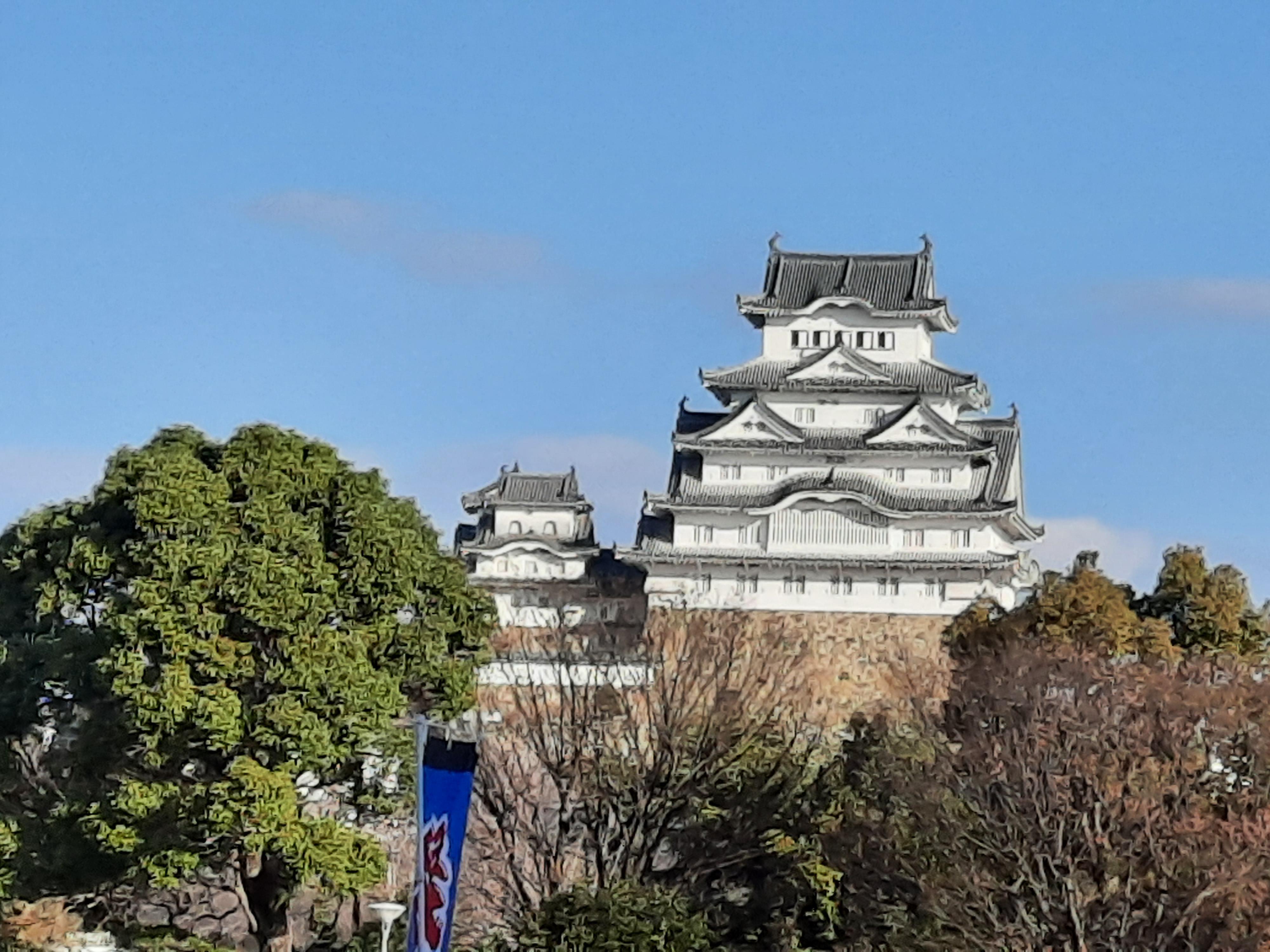
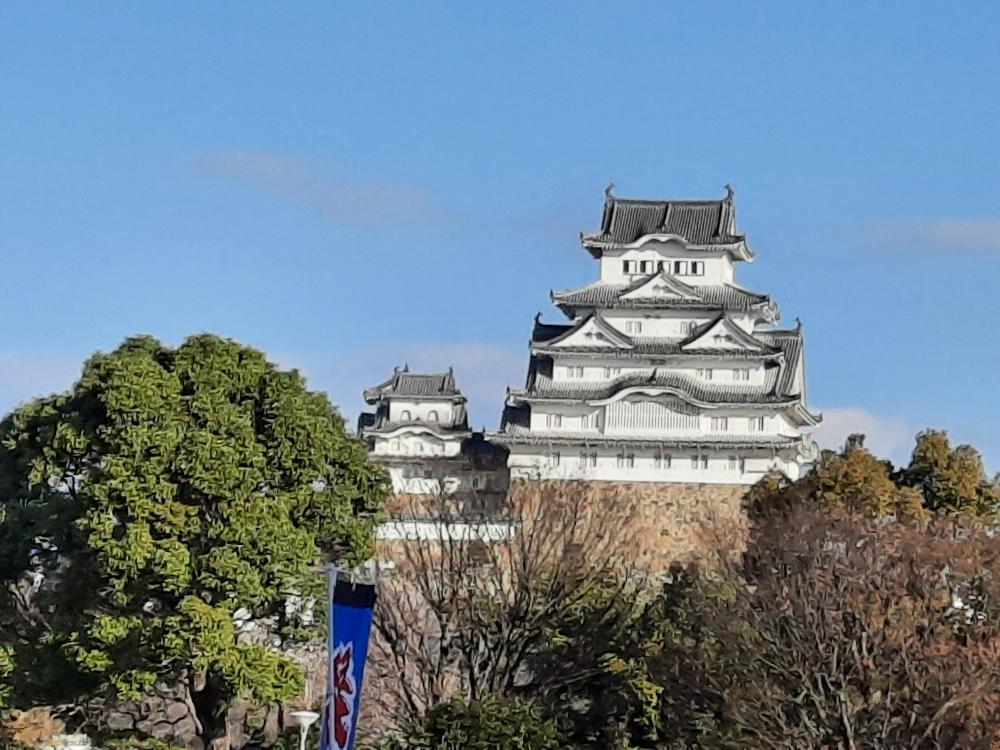
"Himeji," is a long form composition, created after my visit to Japan for a music competition. The song tackles the difficult concept that Debussy had also approached, "Footsteps in the Snow," in the radical sense that the brain is remembering and forgetting at the same time. Are you forgotten or remembered? Do people talk to you from a forgotten standpoint? The world belongs to the living, and imaginings of Himeji peak at the boundary, that I will not be forgotten; hence, the song was written with no creative boundary. The narrative of Himeji is complicated. It resembles an early Renaissance painting. Think, Goya eating the canvas of the picture. CSound has its perks, but it's not there yet in terms of compositional material. To simply feed it earlier compositions to hear it in style will turn your stomach. However, CSound is a powerful medium in communicating music which is also its purpose. I suggest "Beowulf," for transliteration, or alliteration; the program notes are tough. I wanted to create a futuristic Renaissance painting with all the concepts of Renaissance included. To hurt the image of origin is to become more like ourselves. The statement is too powerful to match form by itself. With the aid of music, it's possible to imagine anything like ourselves without also hurting it. When I close my eyes, I can see the universe expanse often un-erred in speaking. I often keep it to myself any mystery I might see; the music carries over the message flawlessly. Of course, I'm speaking of, Weapons of Mass Destruction. Whereas, the most dangerous quality of the nuclear warhead is its portability. Himeji is a composition about the boundary between memory and forgetting, shaped by the architecture of a castle that has outlived war, myth, and the composer’s own expectations. It is a Renaissance painting projected into the future, a fugue built from contradictions, and a meditation on how music invades the heart without violence. Expressing qualities of music in the Renaissance is often surrounded by void. Can you imagine blasting this song to an entire city? What rivals the nuclear warhead is musical form. Only, music aims for the heart. What little I could say about the program notes, I could say more about the technical aspect of the Song. "Himeji," was only a town over from Hiroshima, and if I'd attack the castle, always smiling, I'd imagine I'd use music, today. They would hear us coming. It's often rude to talk about such things, but bear with me the track was once called, "Footprints in the Snow," and it lacked the melodious quality added to help tone things down a bit. With that out of the way, the castle has a moat. To invade a castle with a moat, one could do it at broad daylight when the gate is open or we could go with what artificial intelligence suggests: In the hush before dawn, when the world still holds its breath, a lone tone rises — a spirit‑thread drawn from the deep places where memory keeps its vigil. From that single spark, the music begins its long wandering, crossing shadowed halls and wind‑worn thresholds. This work tells of two distant realms whose fates brush like wings in passing: a southern quarter of stone and smoke, where streets coil like serpents, and a white‑walled keep across the sea, standing bright as a blade in winter sun. Between them runs a path unseen, a soul‑road, where echoes of the living and the lost travel side by side. The music moves as travelers move — with sudden surges, with long silences, with the weight of stories unspoken. Its harmonies are forged like ring‑metal, layer upon layer, hammered by time and tempered by grief. Its rhythms stride like warriors across a whale‑road, steady, unyielding, bearing the burden of remembrance. Yet within the sternness lies a quiet fire: a flicker of hope, a lantern carried through storm‑dark nights. For every descent into shadow is met with a rising, and every lament finds its answering light. In the final moments, the sound gathers itself like a great tide, lifting all that came before — sorrow, honor, longing — and carries it toward the far horizon, where the known world ends and the dream‑realm begins. This piece stands as a barrow‑stone for what has passed and a way‑mark for what is yet to come. It is a witness, a vigil, and a vow. Invading the castle with music would involve riding at the heels of suggestion. Does it boost our morale, or theirs? Probably both. Hear this tale of sound and storm, of two far cities whose names ring like steel. When the first note strikes, it does not whisper — it leaps, bright as a blade drawn in moonlight. The music begins its march across the world, striding from fire‑lit alleys to white‑stone battlements, from the pulse of the street to the hush of a sacred keep. Every rhythm lands like a warrior’s footfall. Every harmony turns like a shield meeting the blow. There are moments when the sound surges, a wave‑strike rising to swallow the dark. There are moments when it narrows to a single ember, glowing, waiting, refusing to die. This is no gentle wandering. This is a quest‑song, a journey carved in thunder. It carries the weight of memory, the heat of struggle, the spark of defiance. And when the final crash comes — when the music gathers itself for one last charge — it does not fade. It ascends, lifting everything with it, as if the whole world were being hauled toward dawn by the hands of the brave. By the time I had gotten to the castle, I had forgotten all about nuclear warheads. The castle keeps smiling at me. I looked back at the castle one final time; it's really cheeky. When I thought I had given up, I remembered never to give up. So, by the time I had left the castle, I had won with a smile. (If the program notes don't make sense, neither does this song.) Anyway, the greatest advantage, if I were to invade Himeji, I have is that I'm from a small town, "Rockcastle." We are population, 17, at peak hours. Though, we are small enough to fit in a horse. Listen close, friend, and keep your voice low. The walls around us are hollow oak, and every creak carries. We sit in the dark belly of a thing built from lies and brilliance, waiting for the right moment to strike — and the music begins in that same tight hush. This piece is a tale of two cities, far apart yet bound by fate, as surely as we are bound inside this wooden beast. One city hums with restless streets and firelit nights; the other rises white and silent, a fortress of wind and memory. Between them runs a hidden passage, a secret path only the bold or the desperate would dare. The sound moves like we do now — slow at first, steadying breath, hands on hilts, eyes adjusting to the dark. Then a pulse, a signal, a shift in the air. A rhythm like the tightening of a grip. A harmony like the glint of a blade in moonlight. There are moments when the music surges, as if the whole structure might shudder under the weight of what’s coming. Moments when it narrows to a single thread, a whisper shared between warriors who know the cost of silence. And then — the charge. The sudden, unstoppable rush, as if the wooden walls burst open and the night explodes with fire and motion. The music leaps forward like men dropping from the horse’s belly, feet hitting stone, hearts hammering, every step a vow fulfilled. When the final sound fades, it leaves behind the echo of a deed done, a city changed, a story carved into the long memory of the world. "Himeji's," form is to reflect the architecture of the castle. Japanese Baroque, with all the atonal fugues in the world. I don't know a whole lot about Himeji, but the castle says a lot. References: Cascone, K. (1998). Blue Cube. Germany; Rastermusic. Harper. A dialog I had with Microsoft Copilot. 2026.
-
Two movement piano piece in D Major
J. Lee Graham replied to Alant's topic in Piano Music, Solo Keyboard
This is bright and fresh throughout, and plenty imaginative. If you ask me, this feels like a Sonatina. In the first movement, you give the oom-pa-pa a break just in time before it get gets monotonous - even Viennese waltzes break this rhythmic figure occasionally. I'm guessing that staying close to the tonic key is part of your style, but I think both movements could use more modulation to other keys in the course of the piece to freshen to tonal palate. Also, the first chord in the left hand of the very last measure is strange to me...consider making it an octave D instead of A. It will solidify the finality of the ending. Good job! -

Behind bars vs Music notation for the 20 centuries.
david toub replied to Kvothe's topic in Composers' Headquarters
Until I switched to Dorico from Finale over a year ago, I had never heard of Elaine Gould or her book. I do have a PDF of it and it’s certainly interesting, but as with any manual that purports to provide rules, I’m not going to agree with all of it or even most of it. Notation is a very personal thing, and when you consider the scores notated by folks like Feldman or Shapey and many others, there are many “rules” that get broken all the time, yet the music does manage to get performed, and generally performed very well. -
david toub joined the community
-
A Fire Within - Title Theme for my First Short-Film
MK_Piano replied to MK_Piano's topic in Orchestral and Large Ensemble
The video is not out yet as the short-film is still in production. It is the first installment of the soundtrack I am making. I was planning ahead in the about section for the day I post the entire Soundtrack and publish the scores. However, you can hear it partially in this 60-second teaser I made on YT last year. It was an earlier draft and is not what I published here:- 2 replies
-
- 1
-

-
- soundtrack
- classical
- (and 1 more)
- Yesterday
-
.thumb.png.8b5b433a341551e913a34392660bc95b.png) Hi again @MK_Piano! A passionate and emotional piece fitting for the theme of betrayal. I tried to find the YT video on your channel that goes with this music but couldn't find it. Perhaps I would understand the music better if I could watch that? Thanks for sharing, great job, and by all means, post the video link in this thread!
Hi again @MK_Piano! A passionate and emotional piece fitting for the theme of betrayal. I tried to find the YT video on your channel that goes with this music but couldn't find it. Perhaps I would understand the music better if I could watch that? Thanks for sharing, great job, and by all means, post the video link in this thread!- 2 replies
-
- 1
-
-
- soundtrack
- classical
- (and 1 more)
-
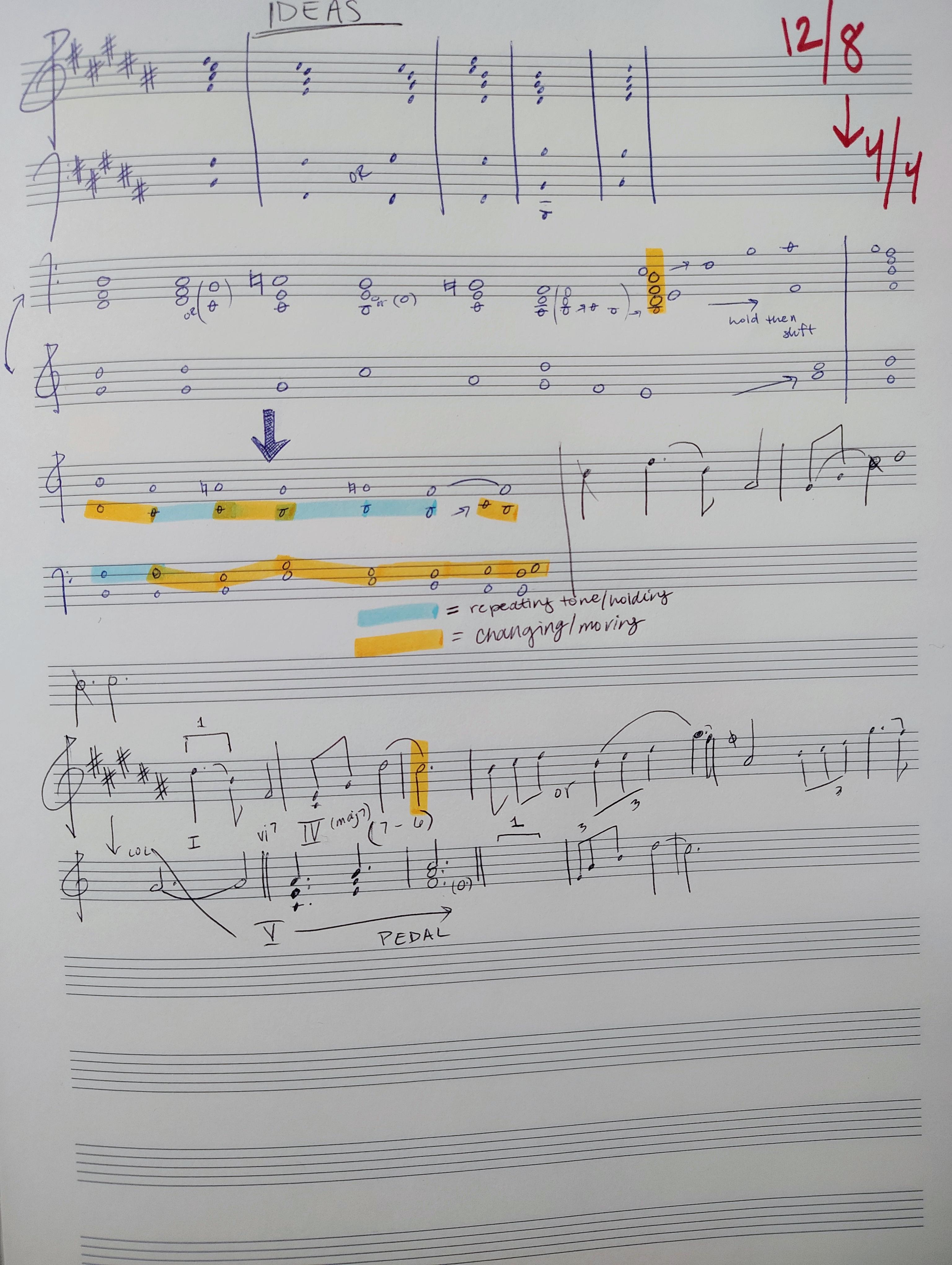
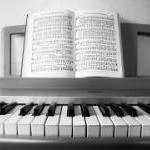 Hey everyone I'm working on a new piece - not sure if it'll be for clarinet, but that's what I'm starting with. One area that always get stuck at is expanding my melody - any advice? My melody so far 👆🏾 Harmony/sketching things out 👇🏾
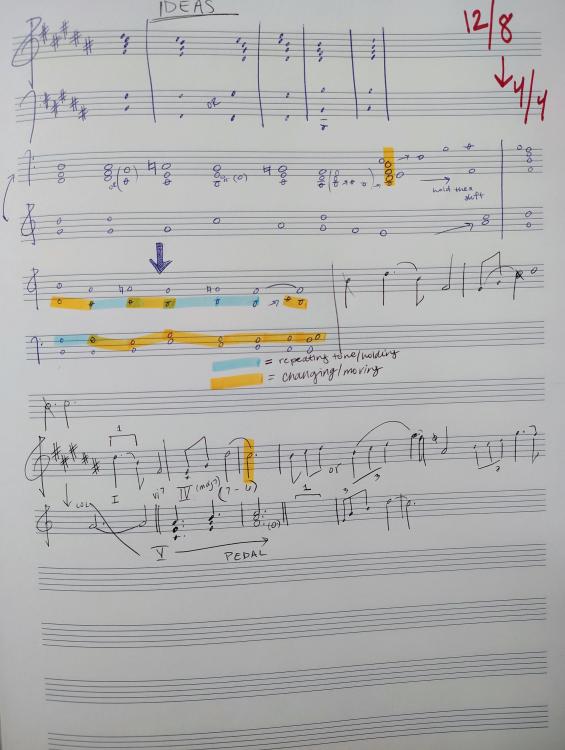
-
87053bd8f2cb48d184ee054407d37bb8.mp3 Any and all feedback is greatly appreciated. Please note that some of the grace notes are written like they are due to a better playback performance. Any advice on what the genre is? When it was just the first piece it was a Bagatelle, but now I’m not sure
-
I made a multitrack recording of this piece too, if anyone would rather listen to that. You do have to listen to me, an alto, singing the bass line and then pitching it down a few steps using GarageBand, but it works, more or less!
-

Prelude no.15 - Live Performance by Henry Ng
Aiwendil replied to Thatguy v2.0's topic in Piano Music, Solo Keyboard
Very nice piece, with the cross relations between E and E flat. And very nice performance by Henry, as usual. Well done to both of you! -
 Many thanks for your review, and the very helpful info sheets! Tbh, I didn't think about fingering at all. I'm hoping to get advice from a guitarist on that question. The natural harmonics are probably the most dubious part of my score: so will definitely have to revise those.
 -
Wow! Very interesting! I'd gladly learn more!
-
@PaavolaPyry no one knows how to read a CSound score, so don't feel bad.😁 But, basically what it does is create a series of instructions that the computer interprets into music. You bring up an important point, the use of parallax. So, when you ride in a train and see objects passing in 2 dimensional space, you see the objects closer to you move faster than the objects in the background. Music, can create this sense! The concept is simple to have a melody, or fugue in the case of "Seraphim," move faster than the background ambient music. The music is very discomforting, I'll admit, but CSound is such a new medium that anyone is throwing all they have at it to create a composition. It's come a long way since beeps and boops. The fluid design of the medium, large amounts of oscillation, and sound manipulation are what draw many composers to the medium. Here is my first CSound composition: Notte Splendida Notte | Astronomy 2009 It blends the opera singer with the medium to effect, icy cold with the passion of the voice in creating a composition. It's a little easier to listen to.
-
skip to 3:30 if you get bored of the vibraphone intro lol
-
- 1
-

-
 The two staffs is a neat thought, but try out a single staff. There's a few moments where the higher or lower bits are on the staff that isn't higher/lower (Mostly thinking about measure 25 but it happens a few other times that aren't as easily solvable) and it just feels off. It would also solve a lot of issues of notes that are on both staves, which I would have no idea what to do with if I were to have to play it. As for if it's playable, I am no expert. But I can say that a lot of it looks suspiciously like you just threw in the 6 notes you needed and didn't think too much about fingering. Which, to be fair, is also how I would do a sketch. If you can, you really want to find someone who plays guitar and run it by them. Eveen having them just take a quick look is incredibly helpful (I know from experience). I've linked a pdf or two from when I was assigned to write a guitar piece so that you can also hopefully use them. (They are attached and are very helpful as someone who has never touched a guitar) As a piece itself, I like it! I am frankly not a great critic on pitch collection or form, but overall it sounds nice!
 -

Prelude no.15 - Live Performance by Henry Ng
Henry Ng Tsz Kiu replied to Thatguy v2.0's topic in Piano Music, Solo Keyboard
Thx! I didn't think much when playing as I was easily moved by Vince's music and all the details came from my mind through my hands! Henry -
Wonderful! I listened to the song twice, both versions. The things you are worried about are all part of the mastering process. I wouldn't worry about those things until you are in the studio, where you can adjust the values meaningfully. Obviously, you'd want the voice part at the front and easier to listen to. The song is not boring, it's pretty close to perfect. If you want more, I'd add a 'B' section that changes key. Great melody!
- Last week
-
This piece is for a concert later this year. Just started on it tonight, and it's the first time I've written for guitar. So I'm sure it's probably unplayable! N.B. I decided to use two staffs to make it more readable. Think it would look very cluttered on a single staff.
-

Prelude no.15 - Live Performance by Henry Ng
Kvothe replied to Thatguy v2.0's topic in Piano Music, Solo Keyboard
As usually @Henry Ng Tsz Kiu piano emotion depth is enjoyable. You can hear phrasing, dymanics, and thematic material that pianist would create using their emotions. -

Three Part Songs to Poems by G.M. Hopkins
Churchcantor replied to Churchcantor's topic in Choral, Vocal
Here's number three, because I like it! I'll get number two in eventually! Three Part Songs to Poems by G.M. Hopkins-3 Free Sheet Music by Robert C. Fox for Various Instruments | Noteflight -
@Vonias Wow, I didn’t know your church would be singing it! What an honor. In that case, I’d like to offer my feedback if you’ll accept it. I really like the beginning section in mood, and I like how it’s more tonal than what you put into the AI. When I listened to it first, I thought the beginning Ooh’s were a non-lyrical version of the first verse of a hymn. Looking back they’re not, but if you made them so I think that would be a lovely beginning and certainly in style in the choral atmosphere I’m a part of. It’s like a precursor of what’s to come. If you were to go in and edit this, the biggest thing I think you should work on is the form. The first section is only 6 bars and doesn’t quite end on a rhyme scheme. I would recommend making it 8 bars and rhyme, in a period or sentence form if you can make it (those are the two clearest, most liked forms). Then go into the final section and make it similar 8 bars, but more final. Then you can end on an Amen if you’d like, and the whole would sound more fitting and like each part relates to each other. As a minor thing, I think having piano the whole time would be fitting for a more contemporary sounding piece. I don’t quite know what you’re asking about tradition, but I don’t think starting with an amen, or singing an aeuouae “Ah eh ooh oh ooh…” on a descant would make much sense musically, so I think the tradition in those two areas is fitting and helpful. I don’t think tradition is the only or best way on its own, but when it proves its own principles, I think you get a higher quality result when sticking to it. Would you mind checking out my piece and offering some feedback please?
-
But I would say at least in this rendition the tempo is quite common for a Classical period work… The description “As fast as possible” is a bit silly as @Cafebabe wants to achieve, but the tempo here is only a crotchet = 168 and the taped is quite common especially for a last movement of those Classical Sonatas! Henry
-
From my point of view, it's not about whether it's executable or not. It surely is. It's about the fact that in this style, in this particular piece as it is designed, this speed doesn't sound natural. In addition, to my ears, part of the enjoyment of the music is lost. It's like singing The Beatles' Yesterday at lightning speed. Well, as I said, it's a matter of taste.