All Activity
- Past hour
-
Hi @TristanTheTristan ! There's nothing fugal here but it's definitely Chinese. Sadly there are no available soundtrack for dizi and erhu, as if they are used it will for sure enhance the unique color of the piece! Just like @Kvothe said the piece is too short, as the compeition requires an entry to have a minimum time of 3 minutes, while here it's not even 2 minutes long. I like the heterophonic nature of the piece, and I think you can have added more details in it like dynamics and slur markings even it's for Chinese instruments. To me it sounds like a typical Chinese music with its pentatonic harmony, maybe you can add some contrasting episodes so that the music will exceed 3 minutes mark and make it more interesting. Thx for sharing! Henry
-
Hi @therealAJGS , I would be regret to say that this one is a less competent piece in this competition. i don't quite think the music captures the landscape of a rainy weather to me. The scoring of this piece is not as polished as other entries, as the music to me is in B minor but there are many unnecessary accidentals in the score without a key signature. The flow of the music is less moving as well, sometimes it just stays without moving forward, especially in passages when there is only one instrument lingering, Even though it may be harsh for you to receive comments not so positive, I hope you will take it as a learning opportunity! Thx for joining the competition! Henry
-
Hi @BipolarComposer ! I really really enjoy the serene atmosphere portrayed by traditionally pastoral double reed instruments. The combination of them with harp definitely enhances the pastoral mood. The sparse spacing, rests and register really gives peace and thoughtfulness to the piece. One strange throught: I imagine the piece would be even more serene by having the bassoon played a Chinese Dong Xiao and oboe by an alto flute, as there are many lower register for the oboe which would sound unnecessarily strong with a low register oboe. Another thought is that, even I enjoy the serene mood very well, maybe you can invite some contrast in between, For example like @Kvothe suggests, you may write some passages with harp playing wider and stronger chords. Also to my observation, the bassoon never really plays its strong lower register which would make some more powerful passages. With more contrast the serene mood will sound more treasured to me. Thx for sharing! Henry
-
Hi @Fruit hunter ! I thoroughly enjoy this entry! To me it perfectly captures a childhood memory and a landscape through a child's lens. The variety of the percussion instruments, the "wild" and apparent "lost" flow really enhances the cute and naive nature of a childhood. After all we all have been children and didn't we pick up what we have at the moment to play with each time? The lack of clear structure to me is not a detriment, but excactly why this music gives rise to our own childhood impression. I love your use of the three keyboard instruments as the main carrier of the melodic narrative, and use other instruments as "sound effect" which reflects the situation you were facing at that time. For example I imagined the out of nowhere rhythms as "naughtiness and curiosity", and clearly ocean drums are portraying raining or seaside scene, The confusing of modes (Phyrgian/Locrian vs minor) in the b.52 passage is very funny to me, and clearly the gongs signify what we bad boys did (tricks lol). And the end is clearly reflections when your mum shouted "oh we need to go home now!" (SAD) What I would suggest is maybe there are more linking passages between each episodes. Also, I would like the piece to be longer a bit because I really enjoy it. Thx for sharing! Henry
-
Hi @InstrumentalistElle ! I really enjoy listening this entry. To me I love your concept here that you submit a descriptive music just like a portrait, rather than a narrative music. This makes this entry really fits for this particular competition. The constant use of artificial harmonics really enhances the mysterious and sublime quality of the Zhangjiajie mountains. To me this entry is more moody and descriptive in nature, hence it is somewhat unfair to have a low score for melody, as I think the variety of timbre and mood and hamronic color completely compensates the less noticable melodic element. I love the harmonies throughout the piece, its non-triadic nature definitely provides some eerily beautiful sound which fits the mystery of nature. I also enjoy the occasional non-harmonics passages, it really contrasts well with its own earthly character as you usually use the lower register of the instruments for the melodies in these parts, comparing to the heavenly harmonics passages. Also you use register really well. By means of register you portray a narrative, rather than relying on melodic materials. That's really great job! Thx for joining the competition! Henry
- Today
-
Hi @L.S Barros ! I think the part writing here is solid and I like your more antique mood with the constant picardy 3rd ending of each phrase and the use of Sackbut, as well as using a Dorian key signature for a minor key work. I think the piece does capture well a hunt in a broad mountain area. Thx for sharing. Henry
-
Thank you very much for all of your responses. If I were to single out the three composers who influenced this piece the most, they would be Richard Wagner, Richard Strauss, and Brahms. As Luis Hernández pointed out, neither of the two works has ever been premiered, which likely makes them impractical in performance. And as Markus Boyd noted, I have also received many comments regarding the atonal and texturally messy construction of the piece, as well as its lack of clear direction or distinct character. I am sincerely grateful for both of your observations. They have given me an important opportunity to reconsider the overall direction of my work. Thank you.
- Yesterday
-
Fair enough. But Henry did mention "It's a work in four movements". But the way he has time stamped it on the video does indeed suggest it's a single movement. I guess where I was coming from initially regarding the time is that we share music on here mainly for feedback, right? The longer a work, the more onerous that becomes and so that feedback may become more general and less targeted to actual technique. The most detailed feedback I have given people on here relates to relatively simple music composed by beginners. None of this is relevant to Henry's music, here; I am just offering my reflections.
-
-
-
Hello The truth is, it’s very difficult to answer your question based on just one piece. And I wouldn’t attempt to do so anyway, as I’m not a professional qualified to judge something like that. What I can tell you is a bit about this piece. I’m used to listening to 20th-century music because I generally like it a lot. I don’t think this is atonal. It bears a certain resemblance to some works with dense counterpoint and a post-Romantic style, such as Richard Strauss’s Metamorphosen, differences aside, of course. I quite like the way it sounds. I also had a look at the piano version you have on YouTube. Although it seems more like a ‘working’ version than a realistic one, because there are things I think are impractical. The sextet version gives me the impression that it sounds a bit too ‘flat’. Although there’s a profusion of written dynamics, you don’t really perceive any great contrasts; perhaps that’s down to the sounds you used. The fact that the texture is very homogeneous throughout also contributes to this. A piece of this sort always seems to be striving for a grand climax.
-
Hello These two pieces sound fantastic. I really like the contrapuntal style of the first one. It’s also a pleasure to see that the scores are so well-crafted, both in terms of their appearance and the dynamics and accents. Also, the sound library looks brilliant – may I ask which one it is?
-
-
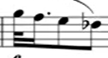
Hey Henry! I remember when you originally posted this piece on this site, and at first, I couldn't get past the awful instrument sounds, but I knew there was something great hidden behind those ugly sounds. So, what I did was I opened the score and I opened musescore 3 and I copied it by hand (only got through movement 3). Doing this, as well as listening to the older versions and reading their descriptions, really helped me to understand the structure of the piece, and its philosophical journey. And the piece is really masterfully conceived, especially structurally. Now there were issues with it, in particular, being a tonal piece, it had some counterpoint issues, and the instrument parts weren't written the most idiomatically either, but these issues you addressed in this revision. And this revision has its improvements, but... I fear it comes from an idea that the original was somehow lacking or "not good enough." I'm going to be honest; I still very much prefer the original version. I listened to the revision a few times now, and some of it just kind of disappoints me. I felt like the modulation into the second theme being shortened wasn't a necessary change and now feels abrupt to me. I thought the dissonance at m. 344 was really interesting without feeling out of place, and that was removed. What really disappointed me was the change you made to the retransition; why remove the dominant pedal for the beginning of the retransition and what is with that awkward clarinet note on 384? IMO it completely ruins the great momentum it had before. I'm also pretty confused why you notated many of the grace notes like this? Was it to fight the playback? It just really looks weird, and you're not consistent with it either, as you sometimes DO use actual grace notes. That being said, there are definitely some things I like. For example, adding pizzicato accompaniment to the cello solo in the exposition's transition was a good move, and I LOVE the additional chromatic lines at the end of the second theme. It's also good that you kept breath in mind for the clarinet and bowing for the strings this time. And overall, the counterpoint was improved (think it could still be better though U.U). I really do love this piece of yours, more than your sextet even, and I think you should be happier with it overall. Some composers here have criticized this movement for having too many ideas, being too long, etc. but I really think that they're just approaching this piece wrong. The piece is a philosophical journey, from point A to point B, and all the steps that you take are necessary for it to be as effective as it is. This movement in particular is tragic--it introduces several ideas and breaks them down. The second theme is derailed, the beautiful climax in the middle is derailed, and the surprising return of the second theme is derailed and corrupted. It's really effective, and really powerful and moving. You're like Mahler but for chamber music lol. I hope you appreciate my praise lol. And understand my issues with the revision may just be my own bias from having studied and loved this piece for so long. Seeing as the middle 2 movements, while also AWESOME, were imo the least polished, I look forward to seeing how you revise those :)
-
At first you can hear the opening bars, but then it does seem to veer off in unconventional directions within the classical fugues. But I don’t think that’s a bad thing.
-
★𝑪𝒐𝒑𝒂𝒄𝒂𝒃𝒂𝒏𝒂 - 𝑩𝒂𝒓𝒓𝒚 𝑴𝒂𝒏𝒊𝒍𝒐𝒘 | V.I.P SYMPHONY ORCHESTRA COPACABANA.mid COPACOBANA - Barry Manilow V.I.P ORCHESTRA Arrangement.mp3 COPACABANA-Score_and_Parts.pdf COPACABANA - Barry Manilow V.I.P ORCHESTRA Arrangement.mp3
-
The sheet music would help see what is actually happening. With respect it does not sound like a fugue, at least in how I understand how fugues work.
-
Of course, I didn’t mean it quite that literally 😅 Form and knowledge of music theory are obviously important, I just meant to say that the form I incorporate into my compositions isn’t always immediately apparent 🙂
-
Thanks for sharing. That is an interesting approach that most likely gives you considerable expressive freedom. Although I would caution against interpreting traditional harmony/voice leading as "strict academic exercise" - like something detached from the real world. If anything, those traditions emerged fundamentally around what sound we perceive as being pleasant and unpleasant. For composers of the common practice period, this became an natural language of sort; but today, you're right, it may seem an academic pursuit to write in a way that revives past traditions.
-
Hello, thank you for listening, I really appreciate it! I view music as something living and fluid, much like flowing water. Even when the structure is crafted beneath the surface, I prefer the form to avoid feeling obvious or rigid upon first listen. My approach, therefore, focuses less on strict harmonic formulas and more on movement, texture, color, and the natural evolution of musical ideas. While traditional harmony and voice leading remain important to me, I treat them organically and flexibly rather than as strict academic exercises.
-
-
Thanks. What is your theoretical approach to composition? Do you think in chords, voice leading, traditional harmony etc?
-
With respect, your reply reads like something generated by AI. And I really wouldn't be surprised if the music was in fact AI generated. It asks a good question, though: "Is it objectively correct that the piece is problematic because it sounds like a continuous mass of dense, abrasive chords without a clear melody?" I did not suggest that my position was objective. I made it clear that I was coming from a perspective influenced by personal taste and training. The atonal and textual messiness without clear direction or distinct character in this work is unlikely to become more than an intellectual curiosity that only you can only possibly understand. This is not objectively problematic, but when you consider the taste of your audience, it can become so if it does not align with broader aesthetic taste. A composer that does not need to care about that is surely privileged but not of much value to the experience of others. And this inadvertently circles back to your question: "[are] my composition skills are strong enough to work professionally as a composer for instrumental music". In the professional landscape, you will need to compose in accordance with other people's vision.
-
-
Nice ideas Henry! Nicely lyrical. I do find your voice leading strategies at times in need of work, particularly in the bass. But I recognize that your conceptual approach may ultimately differ from mine. I would suggest that for such long works, that you post each movement separately. It could improve your engagement with the piece overall, as most people I don't expect to watch beyond 5 minutes.