
All Activity
Past hour
-
Thanks everyone for the constructive feedback! I have some learning to go, especially with notating music😆 @PeterthePapercomPoser I agree it should be 3/4 instead of 6/8. I don't know why I didn't catch that. The time signatures and notation always gets me. Thanks for pointing that out! @Grant Weep I am glad you enjoyed the piece and it's simplicity! Feel free to use it in your home video. All I ask is that my name, Kaiyun Music is credited to the piece. Thank you!!
Today
-
-
Kai.Alexis.Poveda joined the community
-
Hello @elmarad40! I enjoyed the piece really being a „sweet nightmare“ concerning the contrast between the „sweet“ and „dark and mystifying“ musical motifs or themes. The first „theme“ (mm. 1-16) is indeed very pleasant. It reminds me somewhat of pieces written for the Christmas or winter season, in the sense of „Jingle bells“. Now (from mm. 17-31) it gets „broader“ and I would call that theme somewhat „hymnal“. Suddenly, the nightmare starts (mm. 33-48), it seems as the blood is going to freeze in one’s vessels. The fourth theme or motif (mm. 49-65) one could call „the battle“ since it reminds me of a film score – let’s say something like „Star Wars“ (even if I’m absolutely not familiar with movies …), ending with a general rest (mm. 65) – and the four themes return. I like the instrumentation, particularly the dramatic use of the „women’s choir“ in the „nightmare“ theme. Aside from that, there are just a few “minor details” or questions left: You would need four flute players to perform the melody and the chords in the „Jingle bells“ theme, just in the opening bars. In almost all of the timpani passages, I think I hear a snare drum instead (which itself has even not one note in the score).
-
Hello, What a wonderful piece. Obviously it's going to be a patriotic piece of music. I am assuming that you are Ukrainian and therefore, I am wishing your peoples the the very best during this very difficult situation for your country. I am not too knowledgeable on fugues, so I can't speak to the counter point. I had a listen to the Ukrainian national anthem and I can clearly hear the inspiration behind your piece. I have some minor degree of interest in listening to different anthems in the world. Most anthems are a bit more bombastic and simple. I think you've taken something more simple and really made it something more, while retaining the original spirit of the theme! Your explanations at the time stamps are very helpful. Overall the piece sounds very intricate to me. The sheet music is absolutely beautiful, you must have put a lot of effort into it! at 2:47, there is a moment which reminded me of schubert...so much so that I just had to look it up. I believe that the notes are very similar (schubert repeats the E 3x, you repeat it 2x) @ 0:24 of the below youtube video: Love the tremolo ending! Bravo!
-
I am FINALLY done with my piece
-
Some Guy That writes Music replied to CrystalCanon's topic in Incomplete Works; Writer's Block and SuggestionsThen I can help if you want, https://www.youngcomposers.com/t46963/offering-my-experience-as-a-singer/. I could run through some of your phrases to help you get an idea of what it'd be like in a voice. I'm okay with giving continuous feedback if interested.
-
Hello @L.S Barros! Indeed, a lovely Galliard, and thus, another example for your „personal style“! Since we have no score, I can only express my „subjective“ impressions which arose by listening. I learned, that a Galliard is a Renaissance dance in a faster tempo in 3/4 (or 6/4) time with typical steps (and even leaps, jumps, hops etc.). My only concern is that, given the contrapuntal approach, the emphasis on these steps sometimes sounds a bit too much like “block chords.” Perhaps, there could be more motion beneath that „steps“ in the continuo (i.e. on the harpsichord), in that way as it appears starting at around the middle of the piece performed by the cornettos and the recorders. And, by the way, could (Renaissance) cornettos even play that fast?
-
Hi all, My entry for the "From Nothing, to Something" Summer 2026 Composition Competition is a short mixed quintet called "Your dear beauty lovelier still". This was definitely the most challenging piece I have made: making something from nothing was by far the hardest thing I have done so far here. I couldn't find anything that would represent summer apart from giving this song the lyrics of the poem this competition is based on (Donc, ce sera par un clair jour d'été). Btw, since Musescore doesn't have any soundfonts that can sing lyrics, you won't be able to hear the lyrics in the audio. Here is the pdf I hope you enjoy 😁 your-dear-beauty-lovelier-still-musicbro456.custom_score.mp3
-
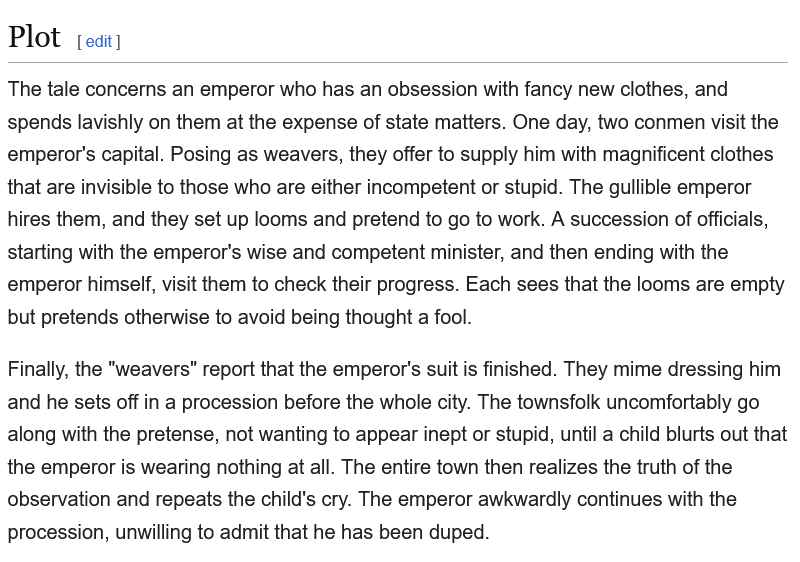
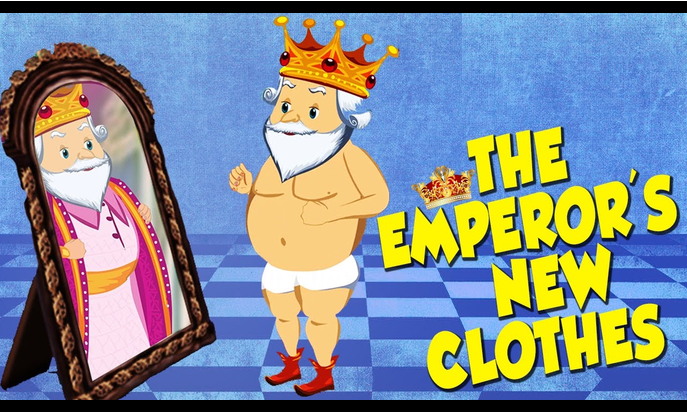
This whole concept sounds like a "Fable" ?........... "The Emperor's New Clothes"
-
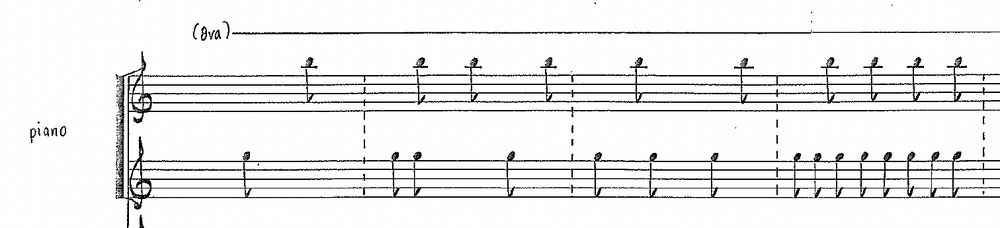
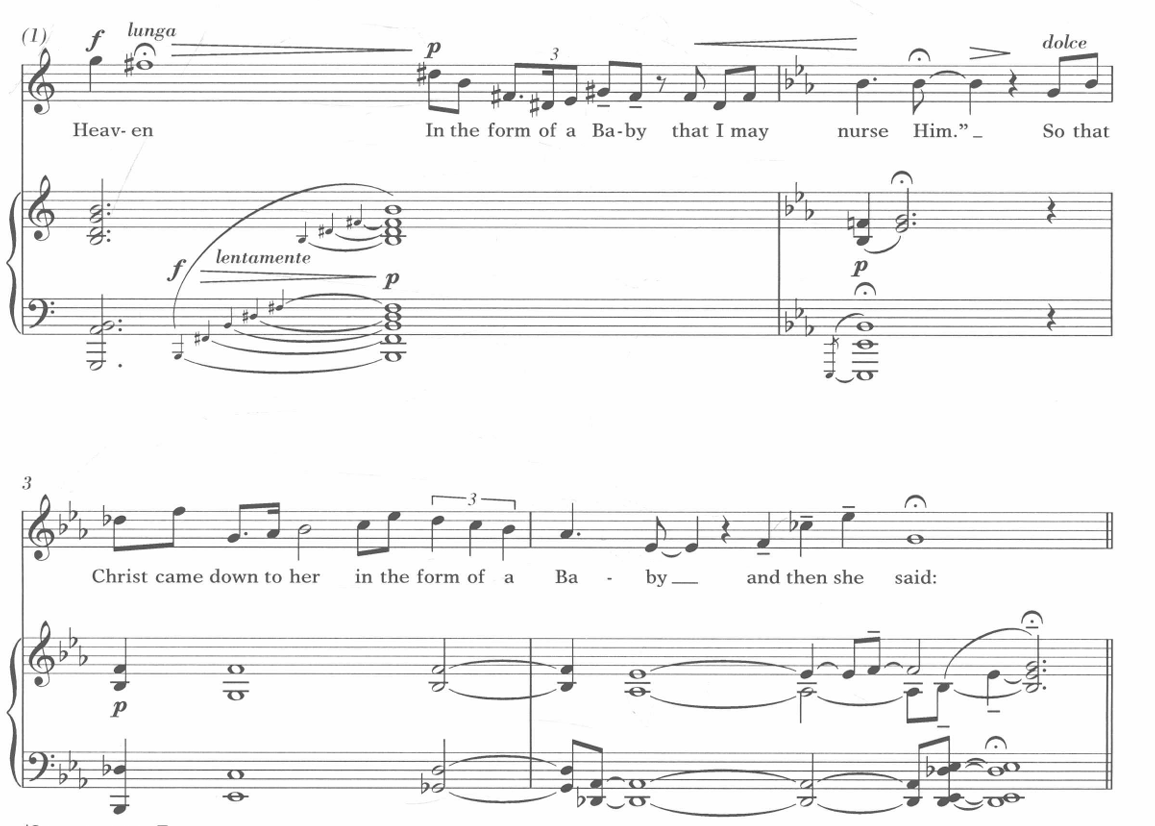
Hello In his short treatise, Messiaen says the following on this subject: To ensure this system is executed correctly without taxing the musician’s mind with constant changes in time signature (such as 5/16, 7/16, 11/16), Messiaen offers the following advice regarding the score: Omit the numerical time signature at the start of the system. Use bar lines only to delimit musical phrases or complete rhythmic periods, not to mark strong accents. Keep the plicae grouped together in logical clusters of notes so that the performer can visually identify the original ‘skeleton’. It is true that this system (I believe the composer himself mentions this as well) is not useful for orchestras, or even chamber ensembles, where changes in time signature must be indicated.
-
My dear fellow composers, (exactly) a half year ago I presented my Fugue XIII in G flat/F sharp major. Today is the right moment to post the corresponding prelude: The prelude againPraeludium-XIII-F-sharp-major-with-coversheet.pdf has the Ukrainian national anthem as its central thematic background (as it also appears in the fugue as additional „subject“, and – as a reference to the date - today is the 35th anniversary of Ukraine’s independence). Here in the prelude, however, the anthem appears in the lightest key of F sharp major with an optimistic character, light and playful in 3/8 time. Some words about the structure or form of the piece: 00:00 (mm. 1-22) Exposition of the „summer“ theme: A joyful, exuberant and perhaps dance-like theme, with accentuated rhythms and chords, although being composed as five-part voice leading. 01:01 (mm. 23-50) The texture and rhythm of the „summer“ theme is continued, but somewhat more restrained in terms of dynamics. The second verse of the anthem is played in the upper voice. 01:43 (mm. 51-75) The key signature changes to G-flat major, initially creating a peaceful atmosphere, much like that of a playground. However, this tranquility is suddenly disrupted by dissonances and tritone steps in the bass, symbolizing the horrors of war. 02:23 (mm. 76-94) The fugue subject (“dona nobis pacem”) appears four times (tenor, mm. 76-79; bass, mm. 81-84; soprano, mm. 86-89 and alto, mm. 91-94), symbolizing hope and leading back to the key signature with sharps. 02:52 (mm. 95-114) Recapitulation of the „summer“ theme, now in pianissimo and in the key of D sharp minor. 03:31 (mm. 115-140) The repetition finally leads to the triumphant finale in the coda: The third verse of the anthem is sung, ending with a bright F sharp major chord after a minor plagal cadence, expressing confidence. I hope, you'll enjoy it. Wieland Praeludium-XIII-F-sharp-major-piano-steinway-b.mp3
-
Hello, This is a very nice piece. It makes me feel something deep inside, which I don't get from most music. I see the comments with the Phillip Glass mentions. I am guessing this piece is more in the minimalistic style. I personally get more of a nature vibe from it. The title, Time and Reflection works extremely well too. I think at measure 62 a fermata would be nice? But yeah, the length is perfect (just under 3mins). The little deviations from the pulse of the piece here and there, the build up and eventual ending. It all works really well. Bravo! I look forward to hearing more from you. P.S. Would you mind if I included this piece in some of my home videos that I edit? (Just for personal use)
-
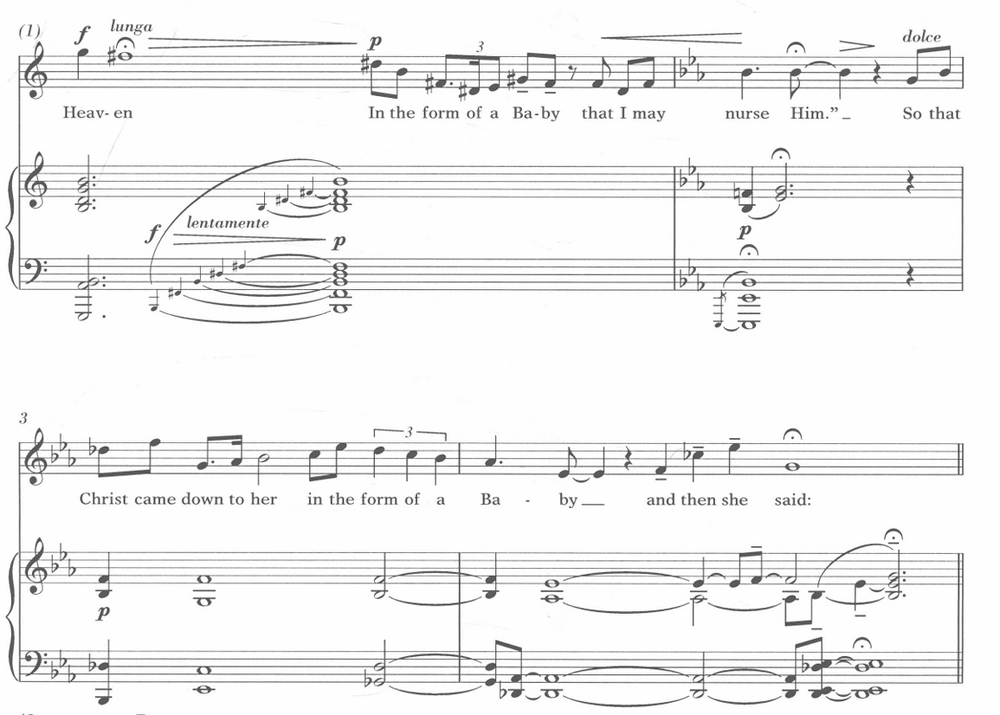
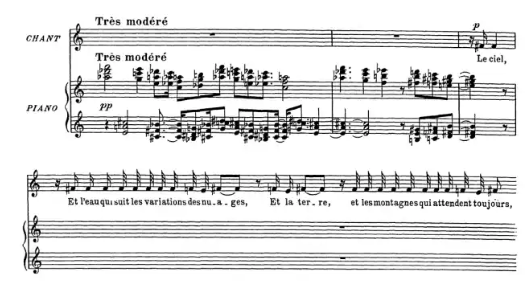
I can see that some composers of art songs (Messiaen, Barber, etc.) omit time signatures entirely in their art songs. I wonder if this is an option -- though probably less practical for larger instrumental groups?
-
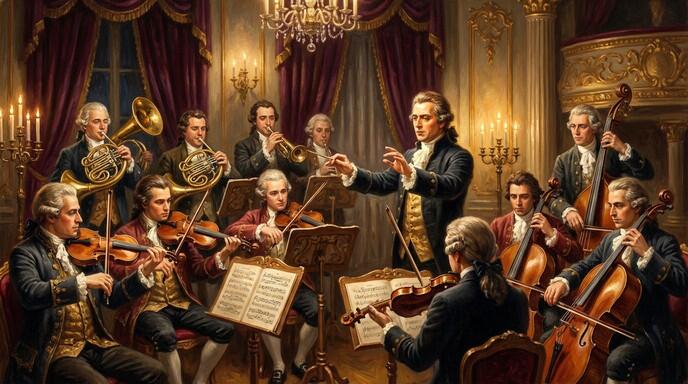
𝐼𝑇𝐴𝐿𝐼𝐴𝑁 𝐵𝐴𝑅𝑂𝑄𝑈𝐸 | 𝑠𝑚𝑜𝑜𝑡ℎ-𝑡𝑜𝑛𝑒TM DEVINE BAROQUE by Mavell.mid DEVINE BAROQUE 2 by Mavell.mid ITALIAN BAROQUE - smooth-tone&amp;amp;lt;span class="ipsEmoji"&amp;amp;gt;&amp;lt;span class="ipsEmoji"&amp;gt;&lt;span class="ipsEmoji"&gt;<span class="ipsEmoji"><span class="ipsEmoji">™</span></span>&lt;/span&gt;&amp;lt;/span&amp;gt;&amp;amp;lt;/span&amp;amp;gt;.mp3 ITALIAN BAROQUE 2 - smooth-tone<span class="ipsEmoji">™</span>.mp3 DEVINE BAROQUE 2 by Mavell.pdf DEVINE BAROQUE by Mavell.pdf
-
Thank you @Some Guy That writes Music for your helpful and detailed post! I see — I had that thought as well. It may be a good approach to first define certain modal colors/atmospheres corresponding to certain emotional themes of the poems (without being overly literal, of course). That’s a good reminder, as my melodies do tend to be wider in register. I’ll do my best to temper that impulse except at the climactic points! Thanks for the recommendations! Not really, unfortunately — I’m technically a baritone but not very competent. I’m simply writing this work for my own satisfaction, trusting that a performance opportunity will eventually surface if the work lives up to my expectations. Thanks for the listening/study recommendations! It’s neat that you mention Berg’s Op.2, because that particular work was probably my introduction to both art songs and musical modernism, while Schumann was my original inspiration to write my own song cycle. Though, these days I’ve been more into French Chansons as opposed to German Lieder. But Andre Previn definitely deserves more attention — I wasn’t aware of his compositions until now! At this stage, I think it may be beneficial to copy select scores by hand, which encapsulate something similar to what I’m trying to achieve in my cycle, and see what I can learn. I’m currently searching through Britten’s Op. 52, and Messiaen’s Poemes Pour Mi for that purpose.
-
Hi All! :) This is my new composition, called Sweet Nightmare. It has dark and mystifying musical motifs with a surreal dimention added to them. I use many instruments of the orchestra along with female voice choirs. Welcome to your nightmare...the curtains are drawn, the light fades and you slip into your unconscious in order to face the surreal with a sweet taste... Enjoy! Sweet Nightmare SWEET NIGHTMARE SCORE.pdf
-
I’ll share something a little different. I’m a big fan of L'Arpeggiata, an ensemble led by Christina Pluhar, in particular their latin jazz inspired interpretations of works by Henry Purcell. For this they collaborated with the brilliant countertenor Phillipe Jaroussky. It’s great, and i love how adaptable they are to reinterpret baroque music in this more contemporary idiom. I’ll link one of my favorites from this album:
-
I appreciate the comments! I wish to provide my thoughts/ reasoning on the string parts: The passage of octaves near the end is no exception to the octave passages that came before it. The triple stops you mentioned are actually quadruple stops (count the "and" of each beat as well). I took the notes and hand position in that moment straight from the Samuel Adler book of orchestration, which had a chart of common voicings for double, triple and quadruple stops during the section on the violin. Thus, while it may add a slight challenge in context, the feasibility of the part is trivial to the greater repertoire of violin and string writing. With the viola, I am aware of the challenge with the choreography of the player, specifically with the bow positioning. However, in the greater context of the piece, it only happens for 8 measures out of 144. To add, the pizzicato part is written to only be played on the G and D strings of the viola (II-III). Thus, the right hand can stay in one place to pluck (whether it's one or two fingers), while the left hand holds a hand position of a 6th, 5th and 3rd across both strings. All in all, while the bow may be placed in their hand, it is feasible. Thanks again!
-
Frank Normandy changed their profile photo
-
review: you dear beauty lovelier still. this is my general effect review: I think this definitely and clearly fits the definition that you tried put on the theme. Not in a bad way, but in a neutral way this feels like a love song nothing wrong with that, but that’s why I took it as. The instrumentation sounds good and even the samples sound much better. The string samples I use I have to physically mark each 16th note for a separated run instead of it sounding all the lagato and sloppy. what you used sounds really nice and of course the piano writing sounds fantastic and I see some of that improvisatory sections inside of the piece as transitioning material. The runs also sound very solid as well. I definitely felt some Lydian elements in there too, so that affect was achieved well About playability let me get the very defendable stuff out the way A. Be careful with the octaves near the end with the violin again this is something very defendable as that a mature violin player with a good amount of experience could do that. It’s just something that could be tricky for someone trying to learn it. The triple stops are possible, just in succession. They may be a little tricky to get right. B. about the Pizzacato with the Viola, this is something that may seem a little more tricky/something that I may be more concerned about as well. I feel like with a bunch of actually looking at it and planning this could be done with a good amount of intense practice, but logistically speaking, you would have to use a similar technique to a harp holding a bow on top of that just makes it a little more messy. Also, the direction of the strings this goes in, also requires the use of more than one finger. anyways, other than that, those are just my gripes this is a really good piece and it fits very well with the theme so with that I enjoyed this one a lot also a nice work with the cover art as always, also thank you for your review on my entry. Definitely helped a lot. melody: 9.5 harmony: 9.7 structuring and development: 8.6 originality: 7 engraving: 10 execution:10 taste: 9.7 average 9.21
Yesterday
-
Hi @kaiyunmusic ! Beautiful piece! I think it is in 3/4 though, not 6/8. This becomes especially apparent at measure 66 where the melody clearly plays 3 quarter notes per bar. But even in the beginning, I perceive the pulse as 3 quarters per bar. And in the 12/8 section I still perceive the quarter note as receiving the beat, so it would be 6/4 there I think. Thanks for sharing this sweet music!
-
entry: "You dear Beauty Lovelier, Still" Melodies Themes Motives Harmony Chords Textures Form Development Structure Time Originality Creativity Score Presentation Instrumentation Orchestration Playability Execution of Given Challenge Taste 10 10 10 10 10 10 10 10 Total score: 10 Average Score:80/80 Review: Execution: the piece was with the given time frame and was written for correct ensemble. It exceeds what was expected for this competition. Score prep: The score was properly engraved. I did not notice any noticeable engraving errors. Playability, orchestrations, instrumentation: Each part that was written with in correct idiom and could. While the piano part is more suitable for advance players, I am sure it is playable. (as the live video shows us). The string parts are readable and can play state level string players and up. Structure: There is a clear sense of form and structure in this piece.
-
Ah yes, functional harmony. 🤨 Why would I pay attention to that if I was intentionally writing something blending minimalism and 20th century writing. :D
-
Posted Sunday, August 23rd, 2026:
-
Hello everyone! The following post in my formal submission for the 2026 Summer Competition: From Nothing, to Something. Below includes a detailed and extensive explanation of the work, both in inspiration and construction. If you wish to skip, the score PDF and Audio will be found at the end. Thanks and talk to you all soon! [TAKEN FROM SCORE] Plus belle encor votre chère beauté - Your dear beauty lovelier still Duration: c. 6:08 Written in 2026, Plus belle encor votre chère beauté is a work for piano quartet that evokes summer and the experience of love. It was composed for the “2026 Summer Competition” hosted by The Young Composers Music Forum and is inspired by Paul Verlaine’s poem “Donc, ce sera par un clair jour d’été,” whose opening line may be translated as: “So, on a bright summer day it shall be.” The poem is number nineteen in Verlaine’s collection La Bonne Chanson (The Good Song) Find the French text and translation to the poem here The title of this work is drawn directly from the French text and has similar inspiration as the Gabriel Fauré song from his op. 61 bearing the same name as the Verlaine poem. However, this work takes the title from the fourth line of text, and unlike Fauré, this work is late-romantic in style. The musical inspiration came from two places: Tchaikovsky and his Nutcracker ballet, and a spell of improvisation at the piano. This work was created in late July and early August 2026, and during that time, I was experimenting with modal improvisation, and felt drawn to G-lydian. Specifically, the ivø7 chord you can build and find in Tchaikovsky’s music. It was also around this time I was listening to parts of the Nutcracker, where I felt drawn to the idea of harp-writing, and thus, during a period of improvisation, the foundation of this work came to be. With structure, Plus belle encor votre chère beauté is in ternary (A-B-A’) form and includes an intro and coda. The B-section acts as our development while the outer A-sections are comprised of a smaller AABA form. The principal theme stated in the A-section occurs throughout the work, where it can be heard in the introduction, coda and within the development where the piano states the principal theme in inversion. Lastly, I composed this work following the end of a relationship. In short, this work evokes those unspoken emotions I harbored and the romance I long to have one day. A day where I too can say “Your dear beauty.” PERSONAL NOTE: For me, the connection to this text, and now to this piece of music, is very personal. By the time this post goes live, my last relationship, of more than a year, ended a month ago. I will leave my thoughts on the matter with this: while rare in occurrence, being in the throes of thought can make the weight of longing feel immeasurable. However, amidst the satin and silk, this piece came to life. To add some fun for the competition, and incase people worry the music is not playable, I can assure you everything on the page works and is practical. However, better to put money where my playing is. A few hours before posting, I decided to record myself playing the work and trying out things. I originally improvised it on piano and this was one of the few times I tried to mimic what is on the page. It is not 1-to-1 and I made certain liberties in performance, however, this was fun to do! (This YouTube video is not my official audio entry for this competition. MP3 for score can be found below. Also, my camera was not in focus during the take... grrr) Thanks for reading, and I hope you enjoy! (The art on the cover page is Claude Monet's "Woman with a Parasol." A wonderful piece of art!) AUDIO_YourDearBeauty.mp3 SCORE_YourDearBeauty.pdf
-
Thanks for the comments. Before you spend more of your time, I must inform you that this version of the work is severely outdated. The most recent copy I have made functions as a complete rewrite. I have changed the form, phrase structure, orchestration, harmonic language and melodic content. Thus, I do not expect to make any changes as you have listed or pointed out. Thanks again!














.thumb.png.8b5b433a341551e913a34392660bc95b.png)