All Activity
- Past hour
-
 Hello Everyone, Thank you for your support in my recent compositions, I really appreciate the great feedback I always get from y'all. Today I have a piece that I really needed to write for myself. I've recently been under a lot of stress, with demands and expectations of other people really weighing me down. The struggle to meet those expectations has hurt my self-esteem. This piece is simply an expression of that feeling, and ends with the hope that I will conquer it all.
 - Today
-
@J. Lee Graham Thank you for your feedback! I've fixed your notes in my personal scores, incase I ever get this performed. @Henry Ng Tsz Kiu @Uhor Thank you both!
-
Hi @Cafebabe! It's funny to listen to this with a fast tempo on a fortepiano, but I would say it's completely managable to play. I like the imitation between hands, and variations of rhythmic patterns. Thx for sharing. Henry
-
Yo Vince, I really love the sensitivity of the harmony in this one. I love the constant false relation of Eb and E in b.4 and subsequent bars. There's real pain in this one whether it's personal or worldwide issue, and it's painful to play as well. Thx for sharing and hopefully writing this helps. Henry
-

Nickelback X Selena Gomez
AngelCityOutlaw replied to AngelCityOutlaw's topic in Jazz, Band, Pop, Rock
Thanks guys! Haha, but I can't really take too much credit tbh. It was fate that made this mashup, and I a mere agent to make it happen. Tbh I never got the Nickelback hate - Yesterday
-

Behind bars vs Music notation for the 20 centuries.
Henry Ng Tsz Kiu replied to Kvothe's topic in Composers' Headquarters
This looks quite useful and interesting! I have to admit, I don't pay special emphasis on musical engraving at all because I never consider an essential part of composing at all. Henry -
Behind bars vs Music notation for the 20 centuries.
Wieland Handke replied to Kvothe's topic in Composers' Headquarters
I also must admit that I’ve never read or heard about those two books. However, score engraving is an interesting topic for me and I take a lot of care to produce satisfying scores for my compositions. Therefore, that „debate“ should be something for me, too. The only „literature“ I’ve actually read about the art of music score engraving is the „Lilypond Essay“ which I’ve linked here. Even if I run the risk of @Henry Ng Tsz Kiu is thinking that I am a Lilypond lobbyist or salesman (😆, I must think on the „rodeo“ between Henry and @SeekJohn14v6 ...), I am just a Lilypond user, and I’m glad with this notation software for two reasons. First, the approach of writing „source code“ and „compiling“ it into a score and a MIDI-file is the right one for me, since in my everyday work I'm familiar with writing tons of lines of source code rather than using a WYSIWYG-interface. The other, and possibly more important fact is, that the resulting engravings are much more satisfying and similar to old-fashioned hand engravings than the most of the other notation software solutions are currently able to produce. So I had a small look again at the above cited „Lilypond Essay“ and, interestingly, the two books you mentioned can be found prominently in the „(Short) Literature List“. I looked around, if I could find some PDFs, excerpts etc. on the internet – and indeed I found some, so that I can take a view on that books to be able to participate in the „debate“ soon. Thanks for the suggestion! -
Quite well, except for the speed. I don't understand why there is such a fondness for music at this unnatural speed. Of course, the virtual instrument does whatever you want it to do.
-

Variations on Mozart/Süssmeyr Requiem
Alex Weidmann replied to Alex Weidmann's topic in Choral, Vocal
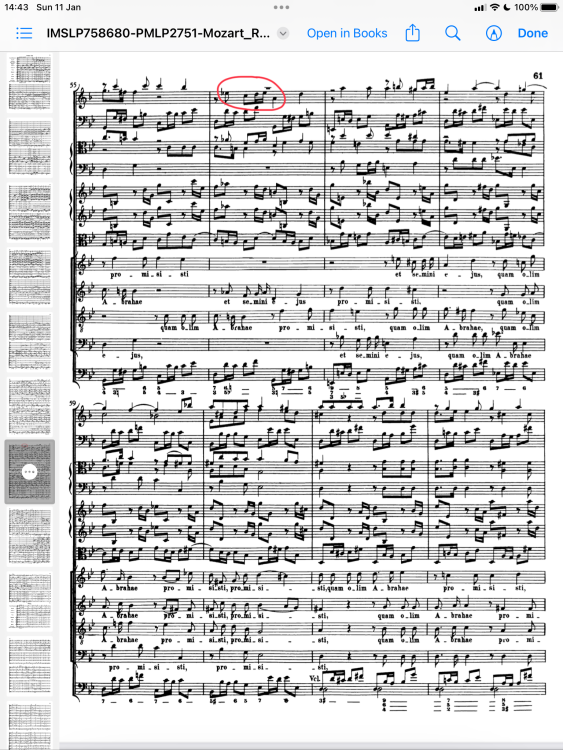
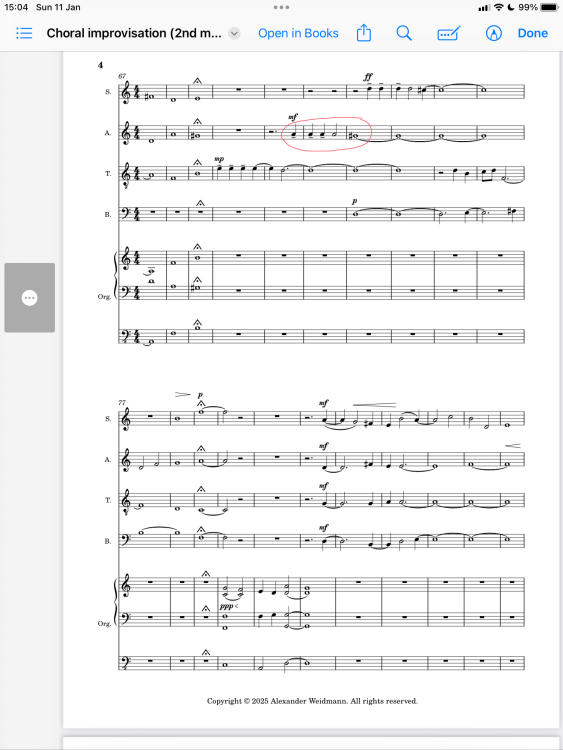
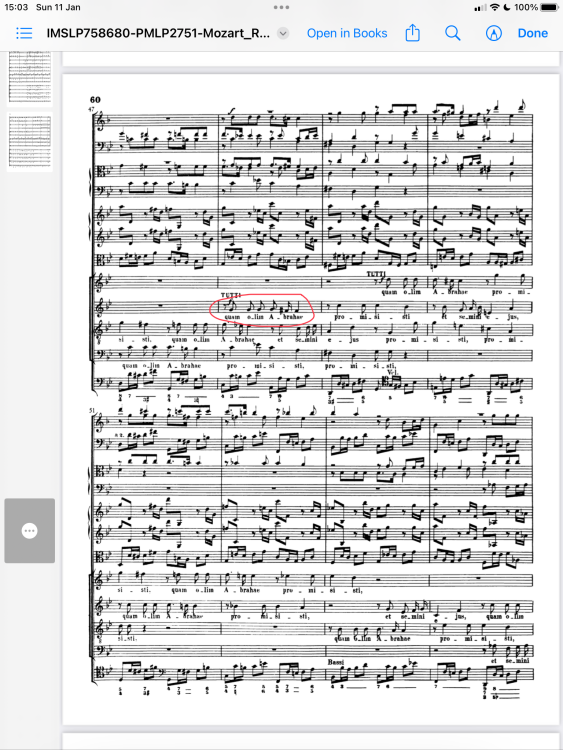
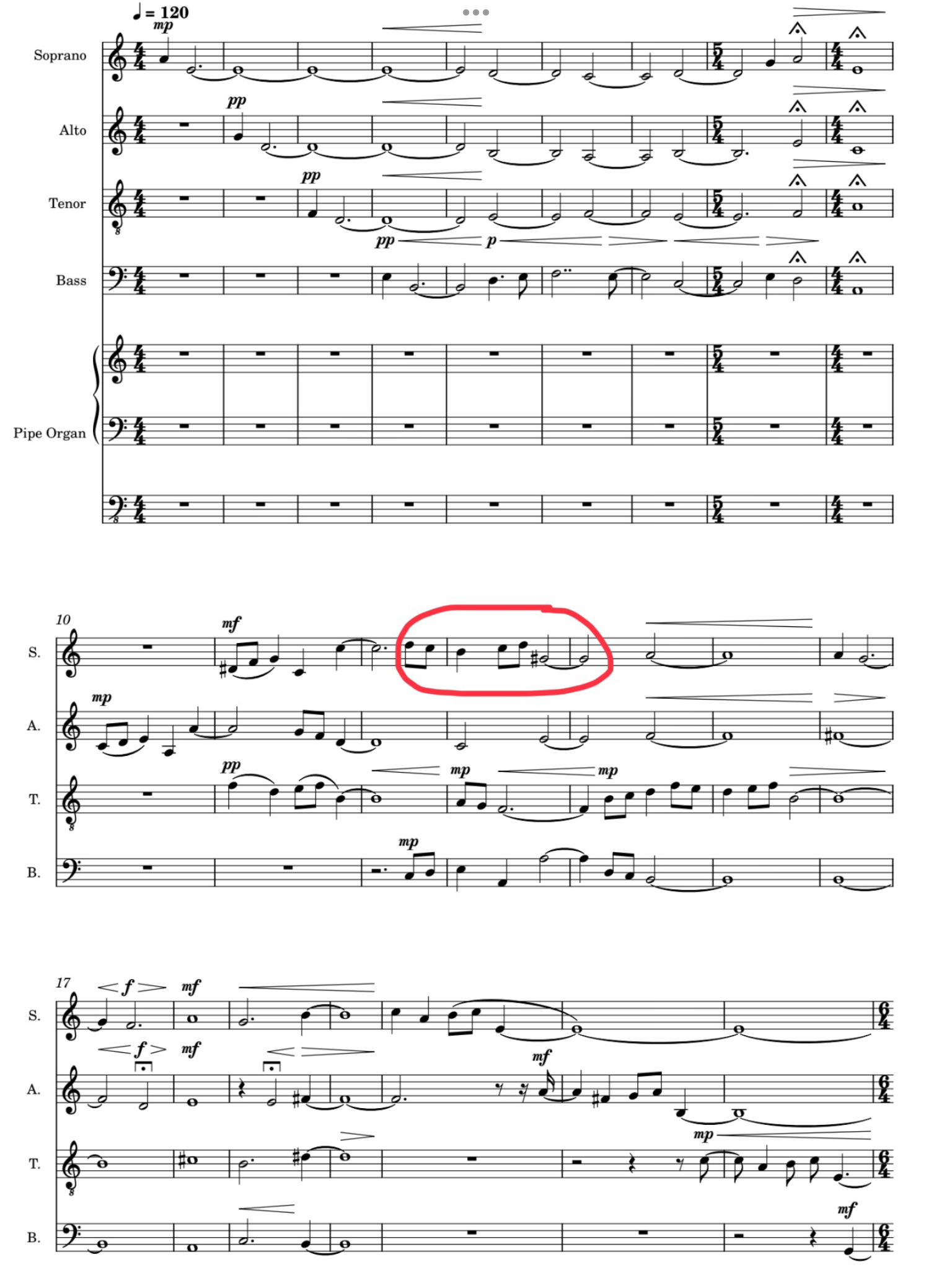
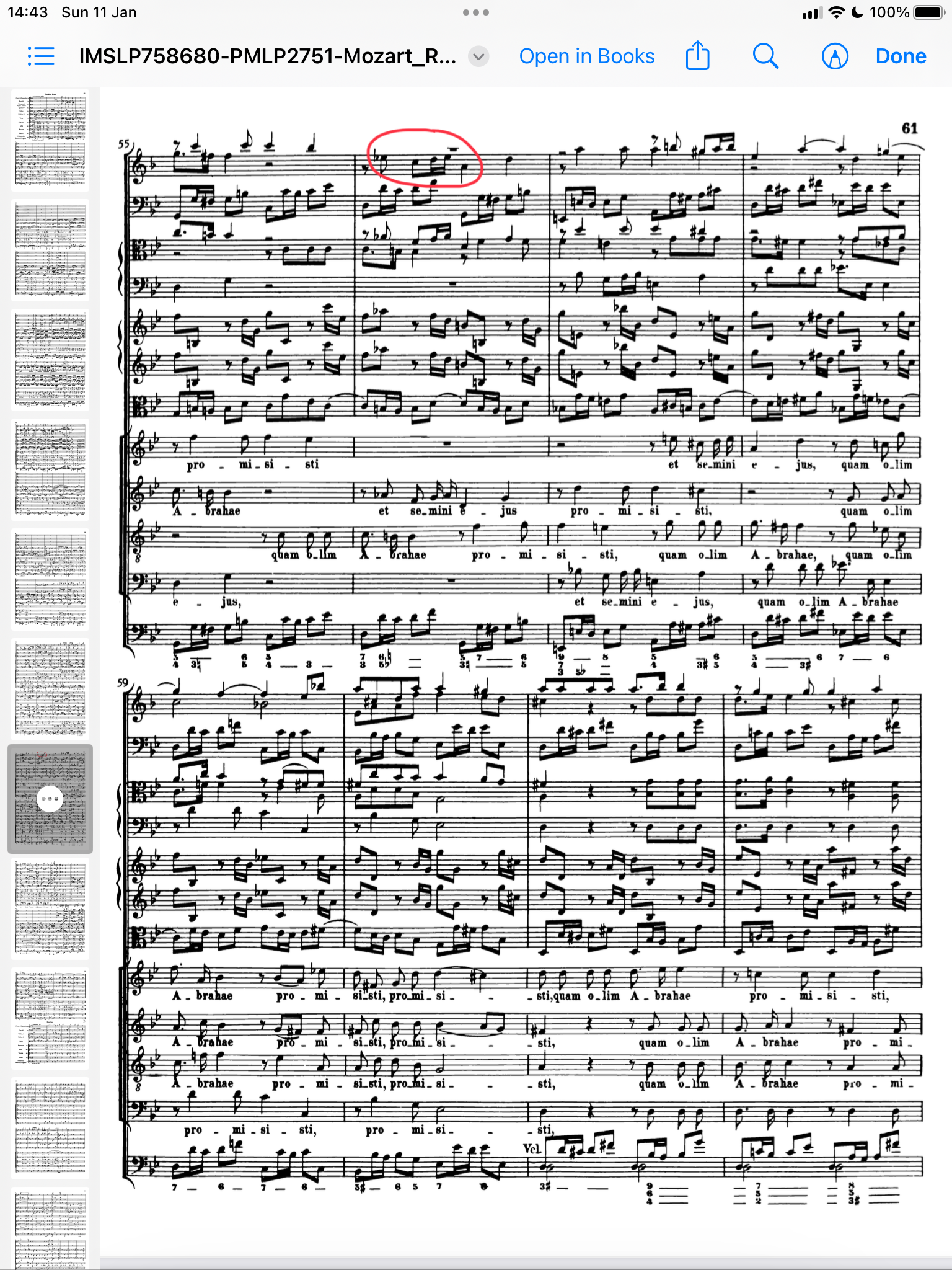
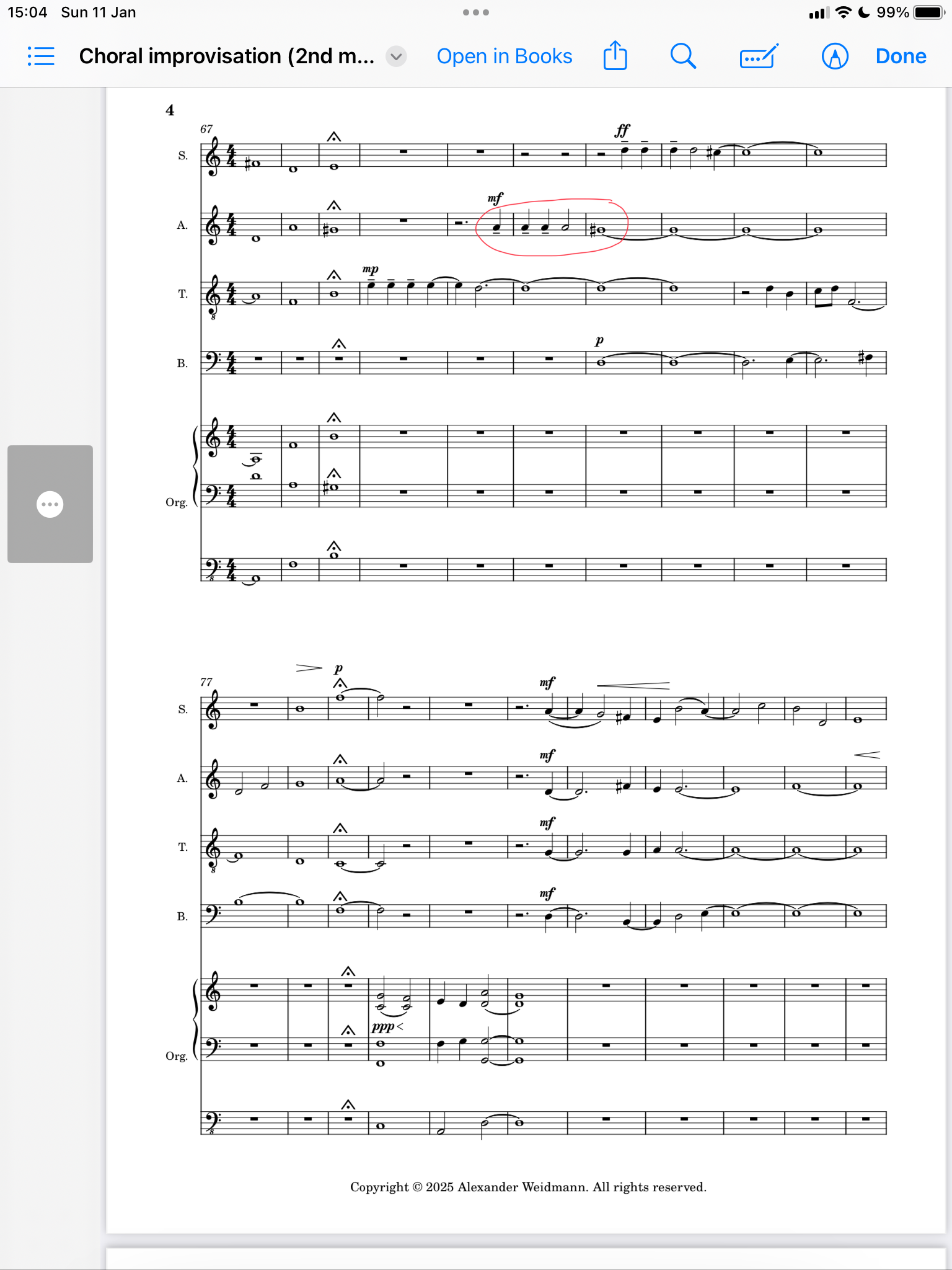
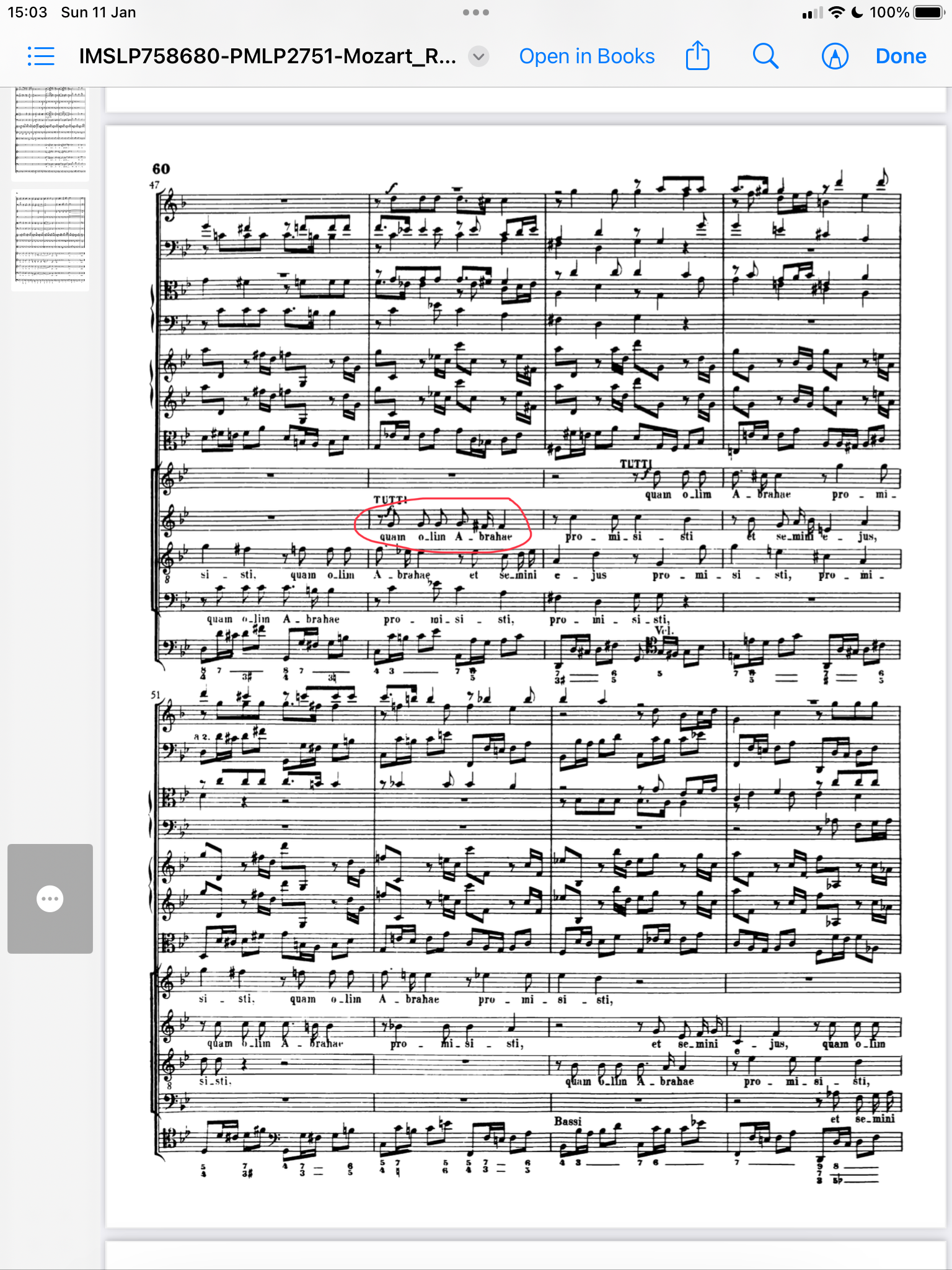
Hi Henry. The quotations are very subtle and fragmentary. E.g. These two quotes from the Domine Jesu. I was aiming for a deconstruction of the Requiem: so I only used a few fragments, rather than quoting long passages.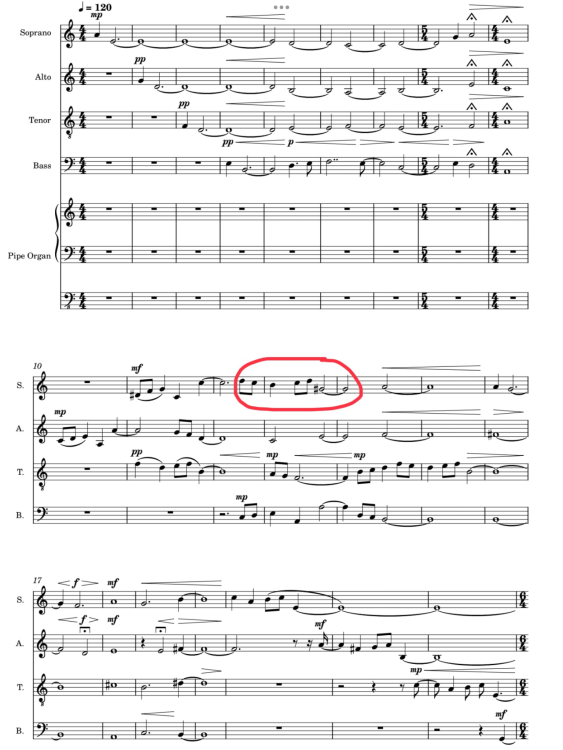
-
I think keeping it is ok, though not necessary because only the cello and later viola would need the accidentals!
-

Trastorno Obsesivo Compulsivo
sebastian Pafundo replied to sebastian Pafundo's topic in Chamber Music
Ohh haha the Paavola translators fail! -
I love that my name "Pyry" has been translated in the message you quote to "Piria"😅😂. But yes! I just woke up but I might send you a private message soon regarding the techniques! I will be following your work very closely!!! You have earned yourself a fan -Pyry
-
Attached is a blog where I have published several essays. Some are related to music, and others may not be of interest to you: Multidimensional Transmission Matrix, Musical Anarchism, Musical Improvisation as a Semiotic Process: A Peircean Reading of American Ciphers, Some Resources Using Escriabin's Mystic Chord, Some Scribbles and Writings of Traditional and Modern Techniques for the Electric Bass, Short Analysis and Essay on Karlheinz Stokhausen's "Studie I", Johann Sebastian Bach and Transcendental Aesthetics, Three Movements of Musical Thought: Thesis, Antithesis, and Synthesis (Three Works, One Concert), Origins of Jazz in Argentina, A Brief Encounter Between Some Eastern Philosophies and Contemporary Music, Archetypal Improvisation: Musical Semiosis Based on Jung, Tarot, Peirce, and Synchronicity. ©Sebastián Ernesto Pafundo. All rights reserved. https://sebastianpafu.blogspot.com/2020/06/soundcloud.html
-
Hi Henry and thanks for the kind words! I definitely tried to get a lot from very little, I've been doing that a lot lately. I did also think about the key sig. change... Do you think I should keep it as is and why so? -P
-
Trastorno Obsesivo Compulsivo
sebastian Pafundo replied to sebastian Pafundo's topic in Chamber Music
Hello, thank you so much for taking the time to listen. What you say about the OCD disorder and the piece is spot on. The piece didn't take me long to compose; once I start, I have to finish. However, it did take me a bit longer to refine some extended bass clarinet techniques. I worked on it with the performer, of course, and he helped me tremendously in resolving some sonic issues, as he has a catalog of multiphonic sounds. The musicians are very good, and I was able to apply structured improvisation using American chord symbols. Thanks again, and feel free to ask anything you like. If it's within my reach, I'll gladly answer. Best regards! -
Hey Pabio, This is a very wonderful work of counterpoint! The canon is definitely very flowing which results in a very soothing timbre all the way. The only concern would only be the instrumentation when the variety of the color of the wind instruments cannot be displayed when they stay in the more or less same register throughout the whole piece. But this is a minor issue to me comparing to the great counterpoint you write! Henry
-
Like Mike I like the complete shift of mood, meter and rhythm in the passages. Thx for sharing! Henry
-
Variations on Mozart/Süssmeyr Requiem
Henry Ng Tsz Kiu replied to Alex Weidmann's topic in Choral, Vocal
Hi @Alex Weidmann! Well I like the timbre of the variation with the long held notes. Just one question, where does the quotation come from?😅 I have performed Mozart Requiem before (as the bass two voice, the lowest in the choir lol) but I don't recall which passage it's from haha. Only after b.97 I recognize it's from the opening Introit of the Requiem haha. It's fun to listen to, thx for sharing! Henry -
Baião de seis(Flute,oboe,clarinet, horn, cello and double bass)
Henry Ng Tsz Kiu replied to dhslamas's topic in Chamber Music
Hi @dhslamas! The music sounds so energetic with the distinctive baião rithm (I have never heard of it before, fogive me 😅). The color of the piece is wonderful too as you give each player their own passages for taking the melodic lead. One small thing is that maybe from 1:28 onwards when the rhythm stops the whole music stops with 2 beats and having gaps in it which I would fill in to push forward the music even more (though it's my preference only). This is a very enjoyable playing as well. Thx for sharing! Henry- 1 reply
-
- 1
-

-
Hi @PaavolaPyry! I love this minimalistic piece. It sounds really reflective and full of emotion despite using only very few materials. Maybe I won't change the key signature in the middle section but that's my personal preference. Thx for sharing! Henry
-
I got my piece to play for today 😁
- Last week
-
 Cheri joined the community
 -
Thank you very much Pyry! Have a good evening!


.thumb.jpg.a1bd070fa88caa1c83527ffe77c97a41.jpg)