All Activity
- Past hour
-
 They could lie, though.
 - Today
-
Sylva Train Runnin' | Official Motion Picture Score from A Fire Within Hello! Over the last calendar year, I have been creating my first short-film called A Fire Within. When completed, the film will follow the tragedy between two friends: Sam and Andy. The story focus on the theme of betrayal as being cordial does not stop greed or jealousy from bubbling within someone. This score is paired with a travel sequence in the film and is my 4th attempt at writing for Big Band Swing. I am very happy with the result and simply wanted to share it! The style was meant to replicate late 40s/ early 50s swing to match the era in which the story takes place. I sampled a little of Miller's "Chattanooga Choo Choo" to help tie into the railroad theme with the main structure being based in verse-chorus with multiple repeats and a key change. If you would like to know more about the score, go to the "About" section on page 4! ________________ Program Note: A Fire Within is an original story written by Mason Kistler detailing betrayal between two friends. Featuring an original soundtrack, soundscape, voice cast and more, this story established itself as the first short-film made solely in the video game Railroader, which was released in December, 2023. Join the orchestra as they bring you in towards this cinematic universe and involve yourself in their soundscape. All aboard as the saxophones open the throttle and the ensemble leaves the station! [DO NOT REPLICATE]
-

Persichetti Exercise 6 - 27 for String Trio
chopin replied to PeterthePapercomPoser's topic in Chamber Music
Very eerily expressive, and I feel like the ending has not resolved. This could be a good candidate for a psychological horror perhaps. Look up the game "The Dark Eye". I don't remember the music of that game, but I feel like this music would work in that type of game.- 1 reply
-
- 1
-

-
Poll concerning AI sub-forum
chopin replied to PeterthePapercomPoser's topic in Announcements and Technical Problems
As far as the 3rd part of this poll, If we decide to regulate, I think requiring / encouraging the composer to give some insight about how they composed the piece, and their motivations of the composition should be enough. -
 GoranTch changed their profile photo
 -
GoranTch joined the community
-
I've moved on to Chapter 6 of Persichetti's "20th Century Harmony" which is about secundal chords and clusters. The prompt was "1. Harmonize the following melody for string trio using chords by seconds." Thanks for listening and I'd appreciate any of your comments!
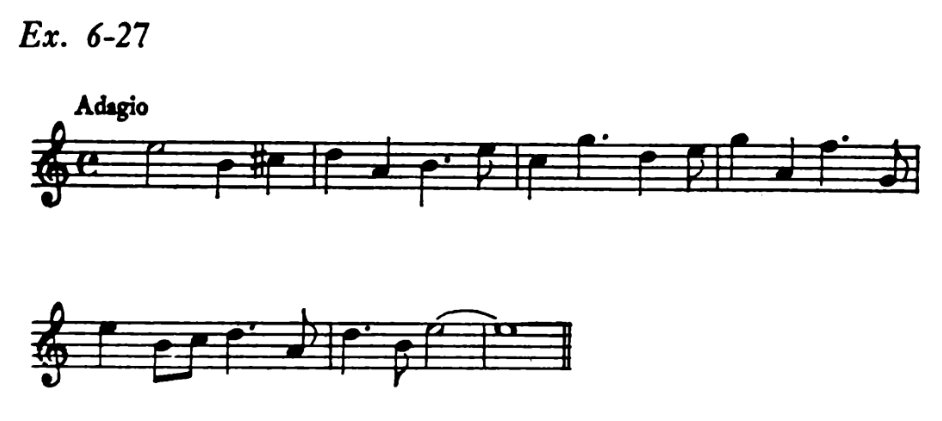
- 1 reply
-
- 2
-
-
Written for the TCN composer clash 56 titled "night market"sadly, due to the requirement of having the maximum amount oftime being four minutes and on top of that, having the piece ofmusic being worked on only for a week, this could've not beenentered in the competition. Red Mountains in Golden silk explores the western mountain sideof China home to the Uyghur people. The piece explores interesting microtonal inflections in the first part which return at the end ,standard tuning is used when things get fast to preservesimplicity, and to keep everybody's sanity Notes about technique: since this piece does use microtones it should be expected. That estimation can be used instead of a specific fingering. This would work better on bases and cellos, and not violins due to the spacing on the fingerboard. Some of the strumming techniques are used to imitate regional instruments, such those as the dutar I think it's a fairly good idea to learn or to find out the traditional technique while still keeping the actual posture of your normal playing method for the most efficiency There is also some instrument percussion all instruments other than the violin will have. This cello is in bases should be kept where they are. Viola could be put on the lap and played like a drum using both hands. Dead stroking is where you do not rebound and you kind of choke the instrument. It is pretty obvious of what a fingerboard slap is as well where you slap the lower part of the fingerboard. Also, while we are at it, there is also some Pizzicato tremolo in the first violin this should just be repeated unmeasured out of time, plucking as fast as you can.
-
Haha, yeah, I love Haydn's musical sense of humour.
-
This would be a very Haydnesque effect! I can never forget how he delibrately asked the strings to mistune their strings while sustaining a chord: (Begins at 23:17) Also the ending of the Farewell leaves me like WTF lol
-
@Henry Ng Tsz Kiu Thank you so much for your thoughtful reviews of each movement! I'm glad you mentioned the timpani solo - I thought it would be amusing if, when the orchestra sets up the cadenza with its 64 chord, the timpanist suddenly decides that they're the soloist and starts playing a timpani "cadenza" before the trumpet gently nudges them aside and proceeds with the real cadenza. I could even imagine a bit of stagecraft where the trumpeter gives the timpanist a "what the hell?" look and maybe the conductor pretends to try to get their attention and make them stop. Anyway, I'm glad you liked the concerto. It's certainly one of the better pieces I've finished, in my opinion.
- Yesterday
-
Persichetti Exercise 5 - 17 for Piano
chopin replied to PeterthePapercomPoser's topic in Piano Music, Solo Keyboard
I would not be able to tell this was an exercise. You expanded on this nicely and logically. This is difficult harmony to use coherently in my opinion, but you kept the idea and flow focused and logical. Fun beat too btw!- 1 reply
-
- 1
-
-

The Purrfect Conqueror | a composition
Martin Kristek replied to Martin Kristek's topic in Orchestral and Large Ensemble
Hey Alex, Thank you so much for such a nice feedback! I will do my best to work on the weak spots in the future. Martin -

The Purrfect Conqueror | a composition
Alex Weidmann replied to Martin Kristek's topic in Orchestral and Large Ensemble
Hi Martin, This sounds experimental, which is always good! Some of your brass writing is very nice, and the cat vocalisations are hilarious! Overall the work feels a bit random at times, and maybe lacks coherence; but still an enjoyable listen. Alex -

Persichetti Exercise 4 - 5 for Women's Choir
pateceramics replied to PeterthePapercomPoser's topic in Choral, Vocal
A very fun sound world! You might be letting yourself in for some trouble at bar 13 beat 4, since all parts have big leaps simultaneously. There is a big chance of the tuning suffering in a live performance. That said, since this is a very short exercise, people could just devote a lot of practice time to that one spot. For those playing along at home, some things that might help a choir tune big leaps: 1. Use accompaniment to help singers seize the key again quickly if they miss their jump. 2. Only leap with one part at a time, so that if they don't stick the landing, the other parts will easily provide a steady foundation to help them readjust quickly. 3. Give a part a brief rest so they can prepare their vocal placement to leap more gracefully. Even just a tiny moment of disconnect will help. Here, the way you have set the text to the music gives a natural pause if you just read the line aloud, which means singers could either disconnect the two notes of the leap, (do it non legato), add an eighth rest to take a full breath, or, given the nature of the piece, even take it out of time with a longer pause (rubato) to get as much time as they need to reset vocally and have their next note firmly in mind. If someone sings your exercise, they would probably take some sort of a pause, since the text allows it, so nice job there! Also, I particularly love your first "their soul is melted." The harmony sounds very melty. 🙂 -

Poll concerning AI sub-forum
bkho replied to PeterthePapercomPoser's topic in Announcements and Technical Problems
As someone involved in education, AI has been a hot topic. I have a pragmatic view that AI, for good or bad, is ubiquitous in our society so it is better to control how it is expressed in the forums where you can set explicit guidelines and consequences for abuse rather than ban it entirely and have it go underground. I would advocate creating a dedicated subforum for AI music and be clear that AI music must be declared as such can only be submitted/discussed there and a clear policy that violating these guidelines can lead to suspension or banning from the site. Also in the end, if someone wants to pass of AI music (or any other creative endeavor as their own), it's really hurting them more so than others. They are not improving their creative process so any praise/feedback is hollow and meaningless. At least it's not stealing someone else's work and passing it off as your own (which has happened to me). I am of the mind that AI generated art in all forms will always be inferior to human efforts so in the end who really cares?. If AI every got to the point there were really think it is on par or superior to human effort, well, then great since a masterpiece is a masterpiece (I am just doubtful that AI will ever be able to achieve this). -
Thanks so much for the feedback. Your critiques regarding the notation and practicality were very useful and honestly not something I had given much thought to until now. I’ll definitely keep this in mind.
-
.thumb.png.8b5b433a341551e913a34392660bc95b.png)
Symphony in E-Flat Major
PeterthePapercomPoser replied to Cafebabe's topic in Orchestral and Large Ensemble
Hi @Cafebabe! This symphonic movement is a joy to listen to! It's bursting with an abundance of drive and energy! I really love the many individual touches you put on the piece that aren't characteristic of any other existing classical composer, such as the way you end the movement in the last two bars. The only critiques I can really have are nit-picks about the notation of the score. The piece is fast enough that it should be in cut-time. It would be wholly impractical to conduct in 4/4. Also, there are multiple enharmonic mistakes such as the C#'s in bars 13, 17, 40, 114, 118, and 138 which should be Db's. Also, the Clarinet can reach a low concert Eb in bars 58 - 59 and 61 - 62 so there's no reason why you would have to transpose it up an octave there like you do. I can see why that would be necessary in the recapitulation though when the same material is reiterated in the tonic key. Thanks for sharing this exuberant movement! -
lmao fast repeated notes on the piano baseline... I'm sure it's no problem for Henry with some practice but I can't do it. the Alberti-like base in all movements is something I don't like but perhaps its a bit personal
-

Three Sententiae for Glissotar, Op. 386
Henry Ng Tsz Kiu replied to luderart's topic in Chamber Music
Hi @luderart! I am really interested in the newly invented instrument with its ability to play glissandos on a wind instrument! Hope your no.2 would be played in real life with the instrument so we know how it sounds! Thx for sharing! Henry -
Hi @Aiwendil! Time for the finale of the Concerto! To me it's the best movement of the whole work. Wonderful hunting theme with a Beethoven-7th-1st mov-like magic of that Long-Short-Long rhythmic throughout almost the whole movement which is so well suited to the dancing and hunting character of the movement, which in turns suits the trumpet to play! The trumpet is virtuosic but not too overly so throughout the movement and the whole work. The climaxes are all well prepared and you don't bombard the piece like many film music do even it's a Trumpet Concerto, with wise control of energy and flow throughout the movement, for example like passages in b.102 when you change both the volume and mood and key for preparing the first climax in the 2nd subject. The use of the orchestras whenever soloust is off is amazing as well, like those woodwind passages or strings passages which definitely provide a good contrast with the brasses, I love the play of motives in b.115 by woodwinds. The use of Timpani is wonderful and the most apparently used in this movement, like in b.269 Timpani solo passage is wonderful. The cadenza is nice, you never get lose of the theme but add harmonic colors onto it, and the ending is a grand conclusion to the whole work. Kudos to this work, thx for sharing! Henry
-
Piano Sonata No. 1 in A Minor
Henry Ng Tsz Kiu replied to Noah Brode's topic in Piano Music, Solo Keyboard
Hi @Noah Brode! As you said this sounds like a Sonatina in the Classical style with some modern touches. With the pedals both the first and second themes reminds me very much of Schubert. For the "majestically" marking in b.35 you may mark "Maestoso". The modulation from b.54 to 55 is a bit abrupt to me if it's a Classical style Sonata, but it's a nice contrast of style. I like the sequence in the development section b.91, and I think it can be extended a bit longer before going to the false reappearnce of the first theme in F major in b.99. The left hand figure in b.111 is almost unplayable, if you change it to an octave figure it would be much more playable. I will review the remaining movements in remaining posts. Henry -
Persichetti Exercise 4 - 5 for Women's Choir
Henry Ng Tsz Kiu replied to PeterthePapercomPoser's topic in Choral, Vocal
This one is a joy to listen to. The fourths are used with great effect esp. in b.5 and b.14 where the sudden modulation to flats chords are great. I also love the imitations between the voice-clearly you build on the exercise to real music with reference to the tradition of motets with the imitations. Thx for sharing! Henry -
Continuing with Persichetti's chapter on added-note chords, I wrote this piano piece. The prompt was "9. Extend the following piano idea, preserving the general character." Thanks for listening and I'd appreciate any of your comments!
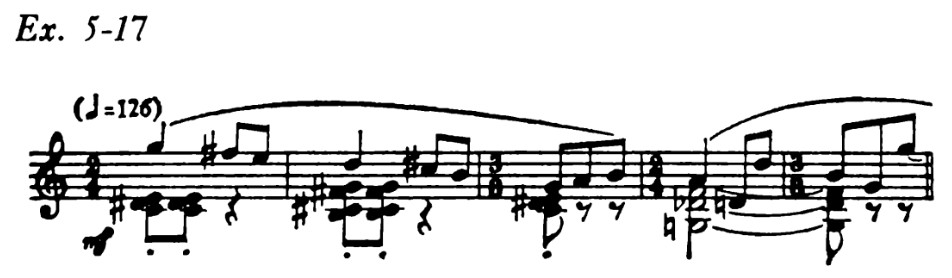
- Last week
-
Two movement piano piece in D Major
J. Lee Graham replied to Alant's topic in Piano Music, Solo Keyboard
@Alant Both of those spots would be excellent, especially 41. -
Hello – This is a minor-key piano sonata in the Classical Style (but with some modern flair). It is about ten minutes long in three movements. I would appreciate any feedback. Thanks for listening! Piano Sonata in Am.mid




.thumb.jpg.a1bd070fa88caa1c83527ffe77c97a41.jpg)