All Activity
- Past hour
-
Hi @Aiwendil! Time for the finale of the Concerto! To me it's the best movement of the whole work. Wonderful hunting theme with a Beethoven-7th-1st mov-like magic of that Long-Short-Long rhythmic throughout almost the whole movement which is so well suited to the dancing and hunting character of the movement, which in turns suits the trumpet to play! The trumpet is virtuosic but not too overly so throughout the movement and the whole work. The climaxes are all well prepared and you don't bombard the piece like many film music do even it's a Trumpet Concerto, with wise control of energy and flow throughout the movement, for example like passages in b.102 when you change both the volume and mood and key for preparing the first climax in the 2nd subject. The use of the orchestras whenever soloust is off is amazing as well, like those woodwind passages or strings passages which definitely provide a good contrast with the brasses, I love the play of motives in b.115 by woodwinds. The use of Timpani is wonderful and the most apparently used in this movement, like in b.269 Timpani solo passage is wonderful. The cadenza is nice, you never get lose of the theme but add harmonic colors onto it, and the ending is a grand conclusion to the whole work. Kudos to this work, thx for sharing! Henry
-

Piano Sonata No. 1 in A Minor
Henry Ng Tsz Kiu replied to Noah Brode's topic in Piano Music, Solo Keyboard
Hi @Noah Brode! As you said this sounds like a Sonatina in the Classical style with some modern touches. With the pedals both the first and second themes reminds me very much of Schubert. For the "majestically" marking in b.35 you may mark "Maestoso". The modulation from b.54 to 55 is a bit abrupt to me if it's a Classical style Sonata, but it's a nice contrast of style. I like the sequence in the development section b.91, and I think it can be extended a bit longer before going to the false reappearnce of the first theme in F major in b.99. The left hand figure in b.111 is almost unplayable, if you change it to an octave figure it would be much more playable. I will review the remaining movements in remaining posts. Henry -
Persichetti Exercise 4 - 5 for Women's Choir
Henry Ng Tsz Kiu replied to PeterthePapercomPoser's topic in Choral, Vocal
This one is a joy to listen to. The fourths are used with great effect esp. in b.5 and b.14 where the sudden modulation to flats chords are great. I also love the imitations between the voice-clearly you build on the exercise to real music with reference to the tradition of motets with the imitations. Thx for sharing! Henry - Today
-
.thumb.png.8b5b433a341551e913a34392660bc95b.png) Continuing with Persichetti's chapter on added-note chords, I wrote this piano piece. The prompt was "9. Extend the following piano idea, preserving the general character." Thanks for listening and I'd appreciate any of your comments!
Continuing with Persichetti's chapter on added-note chords, I wrote this piano piece. The prompt was "9. Extend the following piano idea, preserving the general character." Thanks for listening and I'd appreciate any of your comments!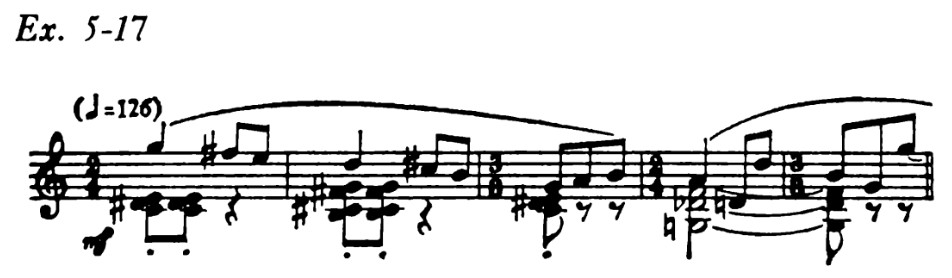
- Yesterday
-
Two movement piano piece in D Major
J. Lee Graham replied to Alant's topic in Piano Music, Solo Keyboard
@Alant Both of those spots would be excellent, especially 41. -
Hello – This is a minor-key piano sonata in the Classical Style (but with some modern flair). It is about ten minutes long in three movements. I would appreciate any feedback. Thanks for listening! Piano Sonata in Am.mid
-
Thank you for the feedback.
-
 ... Since when... Anyways, I agree with your point. It is useless composition if you don't learn from it.
 -
This really sounds like something Mozart would make! This is such a catchy song!
-

Poll concerning AI sub-forum
M. Bulteau replied to PeterthePapercomPoser's topic in Announcements and Technical Problems
Coming back from the dead just to vote on this. The core of any artform is the creative process, and the use of genAI to generate music is anti-process. It focuses instead on the result, and advertises itself as a "facilitator", a "helper", or something to remove the "hassle" of the process. It misses the point that when passion is involved, the creative process is a hassle that one ultimately enjoys. There is no art without passion, and all genAI does is vomit results to the passionless. A creative process comes about through the passionate development of a skill, and it fosters further understanding of said skill. The result is one particular target of a process at a given point in time: it comes about as the inevitable conclusion of a process. This decades-long shift of focus to the result is what makes genAI seem legitimate, because it's the endpoint of a logic that defines art as the object instead of the craft. It's made of the same cloth as the commodification of art, and the reduction of everything to "content." It's a corporate point of view, which can't conceive of art in any other way, and only seeks to expedite what it wrongly perceives to be nothing but a very slow assembly line. I am a composer because I know how to make music, and I learned how to make music by making music. A prompt engineer did not learn how to make an illustration, they learned how to tell a particular machine to do so. One could argue that prompt engineering is a craft, because it isn't absent of human involvement. But where it fails is in never being directly responsible for the result. With genAI, nothing about how to directly reproduce the result is learned because there's no process involved, only instructions by proxy given to a glorified blender. What differentiates genAI from art is the absence of a skillful process directly related to the object. Therefore, the point, and what makes one anything from a hobbyist to an artist, is the process. It just so happens that one cannot go through the process without inevitably coming to a result, which informs more process, and so on and so forth. That's how an artist grows. -
SONATAS GALORE (pieces catalogue update)
while digging some of my old poems, i've managed to find snippets or even full blown movements of some of my old sonatas through old discord dms and an email. it felt nostalgic in a way because i used to share these with my old friends. unfortunately, they've been inactive for a long time.
anways..enjoy them!!!
-
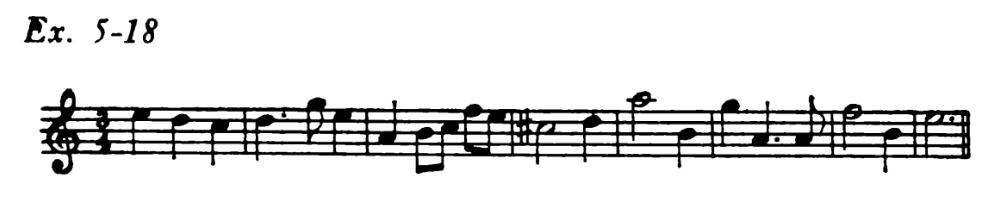
I have moved on to Chapter 5 of Persichetti's "20th Century Harmony" which is about added note chords. The prompt was "11. Harmonize the following melody for strings with triads in the violins and violas, and the added notes in the cellos and basses (in octaves)." Thanks for listening and I'd appreciate any of your comments!
- Last week
-
 Frushe joined the community
 -
 Hello everyone, I am new to this website. I am an amateur composer and would like to share a piece with you that I composed last year. Any feedback is appreciated. MK
-
- 1
-

-

Symphony no 1 in A minor (I) March
Musicman_3254 replied to Musicman_3254's topic in Orchestral and Large Ensemble
I think I've had around 1 year of composing -
Okay, thank you!
-

Symphony no 1 in A minor (I) March
Bjarke replied to Musicman_3254's topic in Orchestral and Large Ensemble
That make sense. But i would still recomened starting with smaller orchestra in the start. Because that will give you far more control over the orchestra later. If you have complete control over smaller ensemble and can impress the listner with that the full orchestra will only add to that. Also a tip from Mike verta: Don't over orchestrate. Only orchestrate what it really needs(something i my self still practice) How many years of experience composing/orchestrating do you have?(just curious) I would recomend taking a look at Ravels: introduction et allegro pour harpe flute clarinette et quatuor a cordes. He seems to do a lot with a small ensemble and sometimes make it sound like a full orchestra. -
Symphony no 1 in A minor (I) March
Musicman_3254 replied to Musicman_3254's topic in Orchestral and Large Ensemble
I was trying to make a symphony a bit like what Gustav Mahler would make, that's why the orchestra is so large -
Symphony no 1 in A minor (I) March
Bjarke replied to Musicman_3254's topic in Orchestral and Large Ensemble
I looked at the score. My advice regarding symphonies would be first master traitional symphonies ideally with traditional orchestra (a whole lot smaller orchestra) in the cannon style of classical or late romantic style before even attempting experimental or innovativ music. How can you invovate without a good foundation of the tradition? Brahms spend 21 years on his first symphony and beethoven so i heard spend from sketching to full orchestra 30 years on his symphony no 9. A symphony is not something you should be doing lightly. I don't say this to be rude but just to give some perspective on the symphony. If you comfortablely can craft a symphony that stand along side Beethoven for example or at least immitate the form style and orchestration then and only then I would say you should try something like this. Also how are you going to get this performed in the future with a orchestra so large? Compose for the musicians not the computer. I would also recomend sketching on a single staff or piano sketch. This is to make something more idiomatic and playable. Only after the whole piano sketch is complete then orchestrate. -

solo guitar Minimal Microtonal Solo for Guitar on the 21st of Jan
PaavolaPyry replied to PaavolaPyry's topic in Chamber Music
Hi Henry! The microtones are only sort of marked in passing and occasionally on the score as I wrote the score for the player. The tuning of the guitar string is what gives the microtonality to the score, so in an effort to not overcomplicate the score I tried to show them as little as possible. As the subtitle says, the G-string is tuned 20 cents high and the B-string 10 cents low. I could also write an analysis score in which all the microtones are visible, but I felt like player-wise this solution felt more organic. But tell me if you disagree, I don't fully know if I made the right decision😅. And indeed initially it was improvisatory but I sometimes do this thing where I first improvise and then try to repeat my improvisation 6-10 times. After a while I land at something, and this is where I landed yesterday :D. Thanks for the kind words and the review ❤️ -
Those are very kind words coming from such a skilled composer as you! I guess I was just in the proverbial zone when I wrote this. Usually I'm much slower, though that often has to do with me getting distracted or losing interest in a project only to return to it later. With this concerto, I managed to stay very focused and worked on it nearly every day.
-

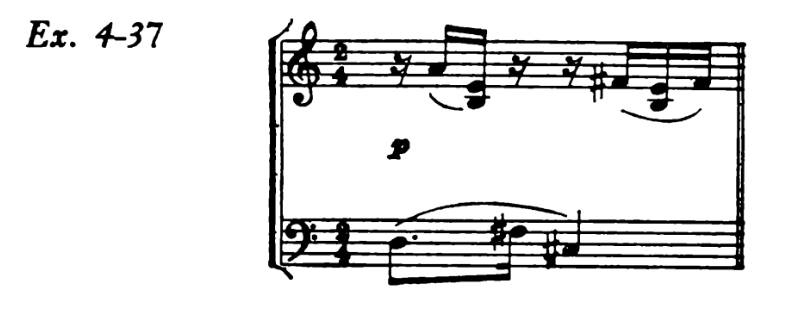
Persichetti Exercise 4 - 37 for Piano
chopin replied to PeterthePapercomPoser's topic in Piano Music, Solo Keyboard
I can see why you struggled though, the motif is not the easiest. But this is one of your best exercises so far in my opinion, because it encouraged out of the box thinking for this one.- 1 reply
-
- 1
-

-
Another Persichetti prompted piano piece! I struggled with this one the most thus far. The prompt was: "6. Continue the following idea for piano." Thanks for listening and I'd appreciate any of your comments!
-
I am immensely envy of you for this; how can you write this Concerto with this quick progress and bear such a sweet fruit?! I have never been able to do that! Either I take too much time, or I write trash!
-

Persichetti Exercise 3 - 50 for Woodwind Quartet
Aiwendil replied to PeterthePapercomPoser's topic in Chamber Music
This is quite nice. I like Persichetti's book but I've never done the exercises in it; you're making me kind of want to give them a try, though!
.thumb.jpg.a1bd070fa88caa1c83527ffe77c97a41.jpg)