
All Activity
- Past hour
-
I think that's very good piece, esspecialy if you' re a starting composer. Keep going!. BTW how long have you been learning orchestration?
- Today
-
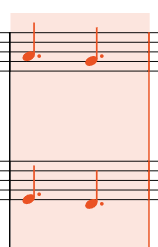
Actually, I was mistaken. The areas I heard weren't parallel 5ths, rather, parallel 4ths. Which are still just as weakening to the overall harmony, in my opinion. places like in measure #51 between the clarinet and flute, for example. (b. 51 Flute & Clarinet) two parts moving at a 4th or 5th interval back to back like that is something to be avoided, as a good rule of thumb, when it comes to composition. (P.S. I've said this before, I think, but GAWD I hate noteflight's navigation... 🤣... Makes me wonder why most, if not all of us just simply use musescore, but to each their own!)
-
And now you know!
-
Hi, I was trying to listen to your music, but it seems the video is set to private!
-
Gregory joined the community
-
Hi everyone. In "Abyss Echoes" it is the first time that I think I've managed to express a part of myself through piano writing, so I'd love to share it with people and get feedback. Feel free to drop a listen and share your thoughts on my music.
-
APYCC joined the community
-
APYCC Young Composer Award 2026 The Asia-Pacific Young Composers’ Collective (APYCC) invites submissions for the APYCC Young Composer Award 2026, an international composition competition for young composers residing in the Asia-Pacific region. The competition is open to APYCC members aged 24 and under. Membership is free and available at youngcomposers.asia/join. Eligibility Open to composers aged 24 and under who currently reside in the Asia-Pacific region Applicants must be APYCC members (free membership) Composition Requirements Original composition for chamber ensemble 2–8 performers Any instrumentation Maximum duration: 8 minutes All styles and aesthetics welcome Submission Materials PDF score Program note Composer biography Recording or MIDI mockup (encouraged but not required) Prizes First Prize: SGD $200 Second Prize: SGD $100 Third Prize: SGD $50 Jury John Sharpley (composer, conductor, educator) Bertram Wee (composer, keyboardist, educator) Deadline July 7, 2026 (11:59 PM Singapore Time, UTC+08) Results Announcement August 1, 2026 Entry Fee None More Information & Submission youngcomposers.asia/competition Contact contact@youngcomposers.asia The APYCC Young Composer Award seeks to support and celebrate emerging composers across the Asia-Pacific region by providing a platform for artistic excellence, recognition, and connection within a growing community of young creators.
-
21st: The Most Innovative Composers In the 21st century, music has become remarkably fragmented compared to previous eras. Yet, as in every age, there are composers who stand out as groundbreaking. Who do you consider the innovative composers of the 21st century? Here are my examples. 1 - Richard D James I consider him to be the greatest composer of the 21st century. His innovativeness has evolved with the times, influencing Mike Paradinas, Tom Jenkinson, Thom Yorke, Björk, and countless others. What deserves particular mention is his use of high-speed, computer-generated rhythms alongside a consistent body of work. From Syro (especially XMAS_EVET10) to Drukqs, and across aliases including AFX and Polygon Window, each release is characterized by detailed sound texture construction. This level of craft places him apart from most contemporary composers. His process of immersion in sound itself appears central to the results. (Related: Tom Jenkinson. Not confined to bass or jazz, he deploys rhythms to develop a distinct style, as heard in his recent Kammerkonzert.) 2 - Georg Friedrich Haas While I am not someone who can analyze and discuss music in a strictly technical sense, starting with In Vain and continuing through subsequent works, there is a distinct originality in how he incorporates conceptual elements — including performance in complete darkness. His style differs from Ligeti's, but the logic of his ideas and his ability to realize them compositionally are notable. 3 - Michael League As producer, leader, and bassist of Snarky Puppy, his compositional work merits attention. He may not belong to the category of historically canonical composers, but tracks such as Somni and The Curtain represent a high level of cross-genre craft. His solo work occupies a distinct space, making use of jazz harmony and a particular tonal quality that is difficult to classify. 4 - Ludwig Göransson Active primarily in film scoring, his work shows consistent originality. Black Panther stands out within his output: rather than simply placing African music within an orchestral, his use of sound reverberation and electronic tones within individual tracks represents a specific compositional decision worth examining. His trajectory outside of film scoring remains an open question. 5 - Ambrose Akinmusire Beyond his work as a trumpet player, his compositional approach is notable for the integration of classical strings and explicit social content. The string writing contributes to a fluid quality in the compositions, and certain rhythmic passages — in combination with the drum writing — share something with Hania Rani's approach. He stands as one of the more genuinely contemporary voices currently active. (These are just my current opinion.) what do you think? Who do you consider to be innovative composers?
-
The new album by Haiduk is awesome. Non stop riffs and speed. Check it out Archdevil https://haiduk.bandcamp.com/album/archdevil Track 2 - VexerI wrote a trombone solo based on sounds I heard while out bar-hopping with one of my bandmates. The audio and score are attached. LasChicasLocasFriend.mp3 Las Chicas Locas.pdf
- Yesterday
What fascinating music. The compositions are fantastic. The piano part is very well crafted but complements the vocals perfectly. I think you’ve captured many Latin rhythms perfectly; in this style, it’s difficult to separate the Spanish from the Latin American elements, as the influences are mutual. I really appreciate the effort you’ve put into playing the piano yourself, as I understand it. The overall sound is very distinctive because this cycle of songs sounds entirely like a style of popular Spanish ‘tonada’ (from which the ‘tonadilleras’ are derived). Originally, the ‘tonadilla’ was a traditional Spanish song of a cheerful and popular nature, performed as an interlude or at the end of satirical plays between the 18th and 19th centuries. Over time, the concept evolved from classical theatre towards the café-theatres and variety shows of the 20th century. Nowadays, the term is directly associated with the great divas of Andalusian copla and Spanish folklore, characterised by their high level of expressiveness, the wearing of long-tailed gowns and a highly dramatic stage presence. Initially, this type of music was accompanied by the guitar and perhaps a small orchestra featuring folk instruments (castanets, tambourines, dulzainas, etc.). But at the start of the 20th century, it evolved to be accompanied by a solo piano – which is how your music sounds – and it also has a very strong ‘cabaret’ feel to it, as it is recorded live, as I gather. As for the language. Well, I’m a native Spanish speaker. It’s quite – very well done. I’m also struggling with these programmes that sing along to lyrics… and I know what a pain it is… The accent is very neutral. It certainly doesn’t sound like any Latin American accent I recognise, let alone an Andalusian one. It’s close to a central Spanish accent (Castilian, as you rightly say) but there are moments when it sounds a bit ‘forced’ – something that many real singers in Spain do. Bravo, and it’s a pleasure to listen to it. And I love it when someone delves deeply into cultures that aren’t their own, perhaps, to bring all this out.Thanks for the positive feedback! Where specifically did you see I used parallel 5ths? It would help me to go back & relook at them. I composed this before I even knew what a tonic was😂Thank you for your feedback! I truly appreciate your help. I wasn't familiar with either of the books you suggested, but after looking them up, they both look really good. I’ll be sure to check them out as soon as I can afford them. (In the meantime, if anyone has recommendations for free resources, that would also be very helpful.) Also, regarding your advice on score study, I need to learn steadily from books. Thank you again for your reply. I’m glad I reached out. Best, Lithl.Yashar joined the communityThank you for taking the time to listen and comment 🙂Rabino joined the communityCloudburst 9 was one of my 3 attempts at a high energy, big jazz band work I wrote in 2007. I played keys in high school and college jazz band. But could I reproduce a 70s big jazz band like Buddy Rich, Maynard Ferguson, etc in my Cakewalk DAW? I decided to gave it a try. My track in 2007 was ok but the drums lacked sophistication. So I opened up the folder and discovered I had audio file tracks without drums. The instrument wav files sounded amazing still. Which I was surprised. Drums now remixed with variation and punch. The trombone and trumpet leads are from the same synth brass from my Roland keyboard. It sounded very much like a trombone and trumpet, but it's a synth patch. One of my fav sections is the final trombone solo where the rhythm section energy picks up a notch. Also I have a favorite minor chord in the work. Maybe you'll notice it. Music and virtual instruments composed and performed by me, no AI . Not really a jazz genre, more like show tune maybe, and fusion. I know the mix can be much improved, but I'm not going to remake all instruments right now. Maybe later. DAW: Cakewalk Sonar 7(in 2007) and remixed with current Cakewalk Sonar All Instruments: Roland Fantom, with added vsti DSK Brass for the sax section Effects - Sunset Live Room, and a touch of spring reverbI enjoyed this too. Has the Chattanooga vibe 100 percent! It's less than 3 minutes and doesn't need a fancy development. Once you get to 4 minutes + maybe add a sax solo or something over a verse. I wrote a few big jazz band pieces as well, in 70's style. Check out my Cloudburst 9. Hope you post something again!- Last week
ignis-caeli_NIR2yoeV.mp3ASTR7X joined the communityHi Uhor, Your brass writing is very strong here, and the percussive hits work really well. My only slight criticism is that the melodic line sometimes feels a bit aimless, like it's meandering around without a clear direction. A good listen overall though.hmmm. The C Section sounds more rustic/medieval to me. I also think that, technically, it would benefit from being written in 6/8 time, starting in the C section, then time modulate back to 4/4 again during your transition into the D section when it goes to 6/8, originally. Overall though, I agree with Peter. It doesn't really strike me as a landscape representation, as much as it strikes me as a short story. I also thought that the D section sounded eerily similar to the Superman theme, though, a bit sped up. 😂 though, Personally, the title "Dusk" doesn't strike as relevant to the music that's written, in my honest opinion. However, none of that detracts from the complexities you have in this score. There are some things you've done very well, such as the percussion parts. They lend well to the orchestration as a whole and I don't think this piece would be what it is without that aspect. Speaking of the orchestration, there were a couple places where you (unintentionally) used parallel fifths in the harmonies, which weakened the strength of them. Try to avoid that, and instead harmonize from a 5th interval to a major/minor third interval, as they tend to be more rich in the way they sound. A Cool piece, nonetheless! -UncHosus joined the communityhttps://www.youtube.com/watch?v=BGSReFcs4XsThe program does the heavy lifting by itself. However, you should check over what you write. "Behind Bars" is what everyone using these days. Stone's "Music notation in the 20 century" comes is second. Stone is about modern notation conventions. Behind Bars is about the standards. Both are useful. I would use Behind Bars make sure my score meets standards. Then if there are modern convetitions i might use stone's. Or score study. (score study is the best.)Thank you for your reply, and I am sorry for the delayed response! Currently, I have a computer automatically generate sheet music for me. What I have in mind is to first use a computer program (such as MuseScore, though I would welcome any recommendations) to automatically convert MIDI into notation, and then study music notation in order to correct and refine the output. As for writing by hand, that is certainly something I would like to be able to do eventually, though I imagine that is still a ways down the road. In addition, my primary motivation for wanting to learn notation is analysis. Just as many of you do, I would love to be able to analyze pieces of music from a notational and theoretical perspective. In short, my two main goals are: correcting and refining the output from software such as MuseScore, and performing musical analysis. Those are what I am primarily hoping to work toward. Best, Lithl.Sympfonija nr1 2 mov.mp3Simpfonija nr 1 jud 2.pdfHere is my symphony




.thumb.png.8b5b433a341551e913a34392660bc95b.png)







(1).thumb.jpg.1336d093d112555a132162dfc44a4d71.jpg)