All Activity
- Past hour
-

Persichetti Exercise 5 - 17 for Piano
chopin replied to PeterthePapercomPoser's topic in Piano Music, Solo Keyboard
I would not be able to tell this was an exercise. You expanded on this nicely and logically. This is difficult harmony to use coherently in my opinion, but you kept the idea and flow focused and logical. Fun beat too btw! - Today
-

The Purrfect Conqueror | a composition
Martin Kristek replied to Martin Kristek's topic in Orchestral and Large Ensemble
Hey Alex, Thank you so much for such a nice feedback! I will do my best to work on the weak spots in the future. Martin -

The Purrfect Conqueror | a composition
Alex Weidmann replied to Martin Kristek's topic in Orchestral and Large Ensemble
Hi Martin, This sounds experimental, which is always good! Some of your brass writing is very nice, and the cat vocalisations are hilarious! Overall the work feels a bit random at times, and maybe lacks coherence; but still an enjoyable listen. Alex -

Persichetti Exercise 4 - 5 for Women's Choir
pateceramics replied to PeterthePapercomPoser's topic in Choral, Vocal
A very fun sound world! You might be letting yourself in for some trouble at bar 13 beat 4, since all parts have big leaps simultaneously. There is a big chance of the tuning suffering in a live performance. That said, since this is a very short exercise, people could just devote a lot of practice time to that one spot. For those playing along at home, some things that might help a choir tune big leaps: 1. Use accompaniment to help singers seize the key again quickly if they miss their jump. 2. Only leap with one part at a time, so that if they don't stick the landing, the other parts will easily provide a steady foundation to help them readjust quickly. 3. Give a part a brief rest so they can prepare their vocal placement to leap more gracefully. Even just a tiny moment of disconnect will help. Here, the way you have set the text to the music gives a natural pause if you just read the line aloud, which means singers could either disconnect the two notes of the leap, (do it non legato), add an eighth rest to take a full breath, or, given the nature of the piece, even take it out of time with a longer pause (rubato) to get as much time as they need to reset vocally and have their next note firmly in mind. If someone sings your exercise, they would probably take some sort of a pause, since the text allows it, so nice job there! Also, I particularly love your first "their soul is melted." The harmony sounds very melty. 🙂 -

Poll concerning AI sub-forum
bkho replied to PeterthePapercomPoser's topic in Announcements and Technical Problems
As someone involved in education, AI has been a hot topic. I have a pragmatic view that AI, for good or bad, is ubiquitous in our society so it is better to control how it is expressed in the forums where you can set explicit guidelines and consequences for abuse rather than ban it entirely and have it go underground. I would advocate creating a dedicated subforum for AI music and be clear that AI music must be declared as such can only be submitted/discussed there and a clear policy that violating these guidelines can lead to suspension or banning from the site. Also in the end, if someone wants to pass of AI music (or any other creative endeavor as their own), it's really hurting them more so than others. They are not improving their creative process and any praise/feedback is hollow. At least it's not stealing someone else's work and passing it off as your own (which has happened to me). I am of the mind that AI generated art in all forms will always be inferior to human efforts so in the end who cares really. And if AI every got to the point there were really think it is on par or superior to human effort, well, then great since a masterpiece is a masterpiece (I am just doubtful that AI will ever be able to achieve this). -
Thanks so much for the feedback. Your critiques regarding the notation and practicality were very useful and honestly not something I had given much thought to until now. I’ll definitely keep this in mind.
-
.thumb.png.8b5b433a341551e913a34392660bc95b.png)
Symphony in E-Flat Major
PeterthePapercomPoser replied to Cafebabe's topic in Orchestral and Large Ensemble
Hi @Cafebabe! This symphonic movement is a joy to listen to! It's bursting with an abundance of drive and energy! I really love the many individual touches you put on the piece that aren't characteristic of any other existing classical composer, such as the way you end the movement in the last two bars. The only critiques I can really have are nit-picks about the notation of the score. The piece is fast enough that it should be in cut-time. It would be wholly impractical to conduct in 4/4. Also, there are multiple enharmonic mistakes such as the C#'s in bars 13, 17, 40, 114, 118, and 138 which should be Db's. Also, the Clarinet can reach a low concert Eb in bars 58 - 59 and 61 - 62 so there's no reason why you would have to transpose it up an octave there like you do. I can see why that would be necessary in the recapitulation though when the same material is reiterated in the tonic key. Thanks for sharing this exuberant movement! -
lmao fast repeated notes on the piano baseline... I'm sure it's no problem for Henry with some practice but I can't do it. the Alberti-like base in all movements is something I don't like but perhaps its a bit personal
-

Three Sententiae for Glissotar, Op. 386
Henry Ng Tsz Kiu replied to luderart's topic in Chamber Music
Hi @luderart! I am really interested in the newly invented instrument with its ability to play glissandos on a wind instrument! Hope your no.2 would be played in real life with the instrument so we know how it sounds! Thx for sharing! Henry -
Hi @Aiwendil! Time for the finale of the Concerto! To me it's the best movement of the whole work. Wonderful hunting theme with a Beethoven-7th-1st mov-like magic of that Long-Short-Long rhythmic throughout almost the whole movement which is so well suited to the dancing and hunting character of the movement, which in turns suits the trumpet to play! The trumpet is virtuosic but not too overly so throughout the movement and the whole work. The climaxes are all well prepared and you don't bombard the piece like many film music do even it's a Trumpet Concerto, with wise control of energy and flow throughout the movement, for example like passages in b.102 when you change both the volume and mood and key for preparing the first climax in the 2nd subject. The use of the orchestras whenever soloust is off is amazing as well, like those woodwind passages or strings passages which definitely provide a good contrast with the brasses, I love the play of motives in b.115 by woodwinds. The use of Timpani is wonderful and the most apparently used in this movement, like in b.269 Timpani solo passage is wonderful. The cadenza is nice, you never get lose of the theme but add harmonic colors onto it, and the ending is a grand conclusion to the whole work. Kudos to this work, thx for sharing! Henry
-
Piano Sonata No. 1 in A Minor
Henry Ng Tsz Kiu replied to Noah Brode's topic in Piano Music, Solo Keyboard
Hi @Noah Brode! As you said this sounds like a Sonatina in the Classical style with some modern touches. With the pedals both the first and second themes reminds me very much of Schubert. For the "majestically" marking in b.35 you may mark "Maestoso". The modulation from b.54 to 55 is a bit abrupt to me if it's a Classical style Sonata, but it's a nice contrast of style. I like the sequence in the development section b.91, and I think it can be extended a bit longer before going to the false reappearnce of the first theme in F major in b.99. The left hand figure in b.111 is almost unplayable, if you change it to an octave figure it would be much more playable. I will review the remaining movements in remaining posts. Henry -
Persichetti Exercise 4 - 5 for Women's Choir
Henry Ng Tsz Kiu replied to PeterthePapercomPoser's topic in Choral, Vocal
This one is a joy to listen to. The fourths are used with great effect esp. in b.5 and b.14 where the sudden modulation to flats chords are great. I also love the imitations between the voice-clearly you build on the exercise to real music with reference to the tradition of motets with the imitations. Thx for sharing! Henry -
Continuing with Persichetti's chapter on added-note chords, I wrote this piano piece. The prompt was "9. Extend the following piano idea, preserving the general character." Thanks for listening and I'd appreciate any of your comments!
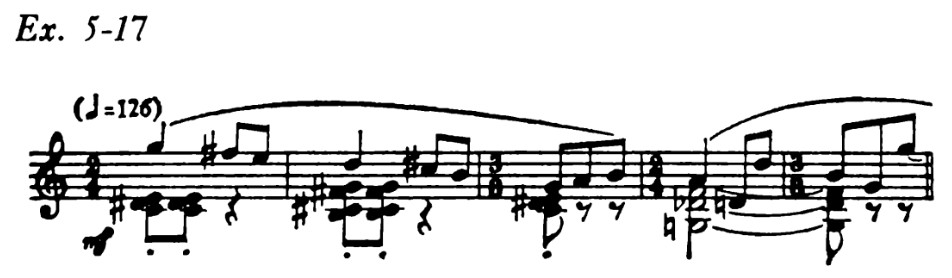
- Yesterday
-
Two movement piano piece in D Major
J. Lee Graham replied to Alant's topic in Piano Music, Solo Keyboard
@Alant Both of those spots would be excellent, especially 41. -
Hello – This is a minor-key piano sonata in the Classical Style (but with some modern flair). It is about ten minutes long in three movements. I would appreciate any feedback. Thanks for listening! Piano Sonata in Am.mid
-
Thank you for the feedback.
-
 ... Since when... Anyways, I agree with your point. It is useless composition if you don't learn from it.
 -
This really sounds like something Mozart would make! This is such a catchy song!
-

Poll concerning AI sub-forum
M. Bulteau replied to PeterthePapercomPoser's topic in Announcements and Technical Problems
Coming back from the dead just to vote on this. The core of any artform is the creative process, and the use of genAI to generate music is anti-process. It focuses instead on the result, and advertises itself as a "facilitator", a "helper", or something to remove the "hassle" of the process. It misses the point that when passion is involved, the creative process is a hassle that one ultimately enjoys. There is no art without passion, and all genAI does is vomit results to the passionless. A creative process comes about through the passionate development of a skill, and it fosters further understanding of said skill. The result is one particular target of a process at a given point in time: it comes about as the inevitable conclusion of a process. This decades-long shift of focus to the result is what makes genAI seem legitimate, because it's the endpoint of a logic that defines art as the object instead of the craft. It's made of the same cloth as the commodification of art, and the reduction of everything to "content." It's a corporate point of view, which can't conceive of art in any other way, and only seeks to expedite what it wrongly perceives to be nothing but a very slow assembly line. I am a composer because I know how to make music, and I learned how to make music by making music. A prompt engineer did not learn how to make an illustration, they learned how to tell a particular machine to do so. One could argue that prompt engineering is a craft, because it isn't absent of human involvement. But where it fails is in never being directly responsible for the result. With genAI, nothing about how to directly reproduce the result is learned because there's no process involved, only instructions by proxy given to a glorified blender. What differentiates genAI from art is the absence of a skillful process directly related to the object. Therefore, the point, and what makes one anything from a hobbyist to an artist, is the process. It just so happens that one cannot go through the process without inevitably coming to a result, which informs more process, and so on and so forth. That's how an artist grows. -
SONATAS GALORE (pieces catalogue update)
while digging some of my old poems, i've managed to find snippets or even full blown movements of some of my old sonatas through old discord dms and an email. it felt nostalgic in a way because i used to share these with my old friends. unfortunately, they've been inactive for a long time.
anways..enjoy them!!!
-
I have moved on to Chapter 5 of Persichetti's "20th Century Harmony" which is about added note chords. The prompt was "11. Harmonize the following melody for strings with triads in the violins and violas, and the added notes in the cellos and basses (in octaves)." Thanks for listening and I'd appreciate any of your comments!
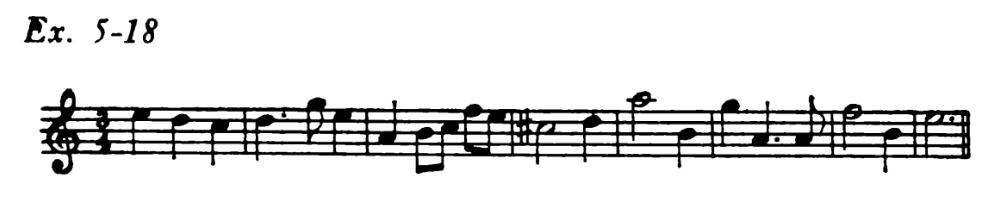
- Last week
-
 Frushe joined the community
 -
Hello everyone, I am new to this website. I am an amateur composer and would like to share a piece with you that I composed last year. Any feedback is appreciated. MK
-

Symphony no 1 in A minor (I) March
Musicman_3254 replied to Musicman_3254's topic in Orchestral and Large Ensemble
I think I've had around 1 year of composing


.thumb.jpg.a1bd070fa88caa1c83527ffe77c97a41.jpg)