All Activity
- Past hour
-

Poll concerning AI sub-forum
Kvothe replied to PeterthePapercomPoser's topic in Announcements and Technical Problems
@Fruit hunter Cant is not what being referred here. That is more score play back and it is not AI. Same goes for NP. Walden is similar to what one would do in a daw. Those are fine. What is not Suno. Suno is completely AI. No perfomace at all. It just words written into app and then creates music? but how? -

Poll concerning AI sub-forum
Fruit hunter replied to PeterthePapercomPoser's topic in Announcements and Technical Problems
I’m kind of on the mix opinion here for me AI music seems very dishonest and rather very silly in its own part. It should have no place competing against real human work however, though I am completely foreign, even encouraging the use of some AI music software’s. (stuff like cantai.) that allows for the performance of a human work to be perfected. Thing number one: I definitely feel like that a performance using AI is not as bad again this is not regarding about the performance of music. This is a regarding about people’s compositions. Thing number two: it should be unfair to have AI as a wild thing in competitions. Sure they could be in an events. Events are perfect for AI as that nobody is competing against anybody, however, though I feel like top priority should be given to real people’s human works first AI could wait. Competition competitions and AI do not mix unless if you have a AI only competition My final thing to say though is, I am very mixed about having a AI only sub if we do have one sure I wouldn’t mind as much and it’s not a huge problem but again you’re not composing music at least there should be someplace for AI music here and to have at least a very strong filter that can be unable to get rid of it for those who do not want any part of it things to go against AI is definitely some anti-AI software to tell if someone is using it for ill intent. At least some knowledge of a piece of music can work as proof and even if it’s a short thing, then at most a score to accompany with it. Honestly for contests score in audio should be mandatory unless if stated otherwise. Thank you. - Today
-
The slowly moving bass chords sound like they would tell a wondrous, but very sad tale. It feels like you mix a more modern handling of dissonances etc with romantic traditions, and this makes the prelude very colourful. At least many shades of grey. The build-up to m.27 is especially nice. The form also works well for this short piece. Thanks for sharing!
-

A short Sonata in D Major for Cembalo
Willibald replied to Willibald's topic in Piano Music, Solo Keyboard
@Wieland Handke, thanks for your gracious words and the extensive review. Regarding the second theme in the Allegro, I have composed a version with a more independent bass line in m. 13, 15 and 19 (not 23); it hasn't the same drive as the quasi-Fauxbourdon, but it is something I will revisit as, yes, it is a bit repetitive. The score has to be reformatted for playing, no question about it. This is especially true for the Rondo which I produced rather quickly. Thanks for looking at the bass line in the Andante; I will have a look. While I am no productive Lilypond user anymore (which I am still fond of), I have indeed a separate file for audio output for all movements. As it was customary to ornament the repetitions, I added some plausible ornaments in the audio file for the minuet, and some other small modifications which an experienced cembalist would add. -
 femboy_sharky changed their profile photo
 -
 Ellen joined the community
 -
Dear J. Lee Graham, I'm hoping to use this in a teen chamber music program I teach. If it gets performed, I'll let you know here.
-
A few parts recorded without pre-planning. Background is minor piano arpeggiated with Arpache SX. Recorded without planning. Majour foreground piano is hammered in without planning also. Piano is layered VSTi HALion. Keybed is ModX6.
-
I know this tempo is quite unplayable, but since the composition itself is fairly trivial and a bit silly, I felt that presenting it at an unnatural speed made it more entertaining to listen to
-
Baião de seis(Flute,oboe,clarinet, horn, cello and double bass)
dhslamas replied to dhslamas's topic in Chamber Music
Thank you for your feedback , Henry Ng Tsz Kiu. -

I'm beginning to write a small oratorio
JP S. replied to Cafebabe's topic in Orchestral and Large Ensemble
@Cafebabe Thanks, and I will give this a helpful review too. I mean to start you have nice, clear harmonies. It creates a pleasant feel, and I like how you chose a string quintet which can make timbre and rhythmic changes easier to navigate since you have another voice. You also have a consistent tone throughout. I think the biggest thing you could do differently to make it more pleasant/interesting would be giving more rhythmic variety. The dotted rhythm is almost entirely the same in the beginning, even across all the voices. In the fugue, the running 8ths have little room for “breath” in the melody, so adding variety would make it feel more natural. I think you had more sense of melody & variety from 28 to the end, so nice job there. Would you mind checking out my piece for feedback please? -
Thank you! I'm using https://www.soundtrap.com to make the instrumental part.
-
 Hello Everyone, Thank you for your support in my recent compositions, I really appreciate the great feedback I always get from y'all. Today I have a piece that I really needed to write for myself. I've recently been under a lot of stress, with demands and expectations of other people really weighing me down. The struggle to meet those expectations has hurt my self-esteem. This piece is simply an expression of that feeling, and ends with the hope that I will conquer it all.
 -
@J. Lee Graham Thank you for your feedback! I've fixed your notes in my personal scores, incase I ever get this performed. @Henry Ng Tsz Kiu @Uhor Thank you both!
-
Hi @Cafebabe! It's funny to listen to this with a fast tempo on a fortepiano, but I would say it's completely managable to play. I like the imitation between hands, and variations of rhythmic patterns. Thx for sharing. Henry
-
Yo Vince, I really love the sensitivity of the harmony in this one. I love the constant false relation of Eb and E in b.4 and subsequent bars. There's real pain in this one whether it's personal or worldwide issue, and it's painful to play as well. Thx for sharing and hopefully writing this helps. Henry
-

Nickelback X Selena Gomez
AngelCityOutlaw replied to AngelCityOutlaw's topic in Jazz, Band, Pop, Rock
Thanks guys! Haha, but I can't really take too much credit tbh. It was fate that made this mashup, and I a mere agent to make it happen. Tbh I never got the Nickelback hate - Yesterday
-

Behind bars vs Music notation for the 20 centuries.
Henry Ng Tsz Kiu replied to Kvothe's topic in Composers' Headquarters
This looks quite useful and interesting! I have to admit, I don't pay special emphasis on musical engraving at all because I never consider an essential part of composing at all. Henry -
Behind bars vs Music notation for the 20 centuries.
Wieland Handke replied to Kvothe's topic in Composers' Headquarters
I also must admit that I’ve never read or heard about those two books. However, score engraving is an interesting topic for me and I take a lot of care to produce satisfying scores for my compositions. Therefore, that „debate“ should be something for me, too. The only „literature“ I’ve actually read about the art of music score engraving is the „Lilypond Essay“ which I’ve linked here. Even if I run the risk of @Henry Ng Tsz Kiu is thinking that I am a Lilypond lobbyist or salesman (😆, I must think on the „rodeo“ between Henry and @SeekJohn14v6 ...), I am just a Lilypond user, and I’m glad with this notation software for two reasons. First, the approach of writing „source code“ and „compiling“ it into a score and a MIDI-file is the right one for me, since in my everyday work I'm familiar with writing tons of lines of source code rather than using a WYSIWYG-interface. The other, and possibly more important fact is, that the resulting engravings are much more satisfying and similar to old-fashioned hand engravings than the most of the other notation software solutions are currently able to produce. So I had a small look again at the above cited „Lilypond Essay“ and, interestingly, the two books you mentioned can be found prominently in the „(Short) Literature List“. I looked around, if I could find some PDFs, excerpts etc. on the internet – and indeed I found some, so that I can take a view on that books to be able to participate in the „debate“ soon. Thanks for the suggestion! -
Quite well, except for the speed. I don't understand why there is such a fondness for music at this unnatural speed. Of course, the virtual instrument does whatever you want it to do.
-

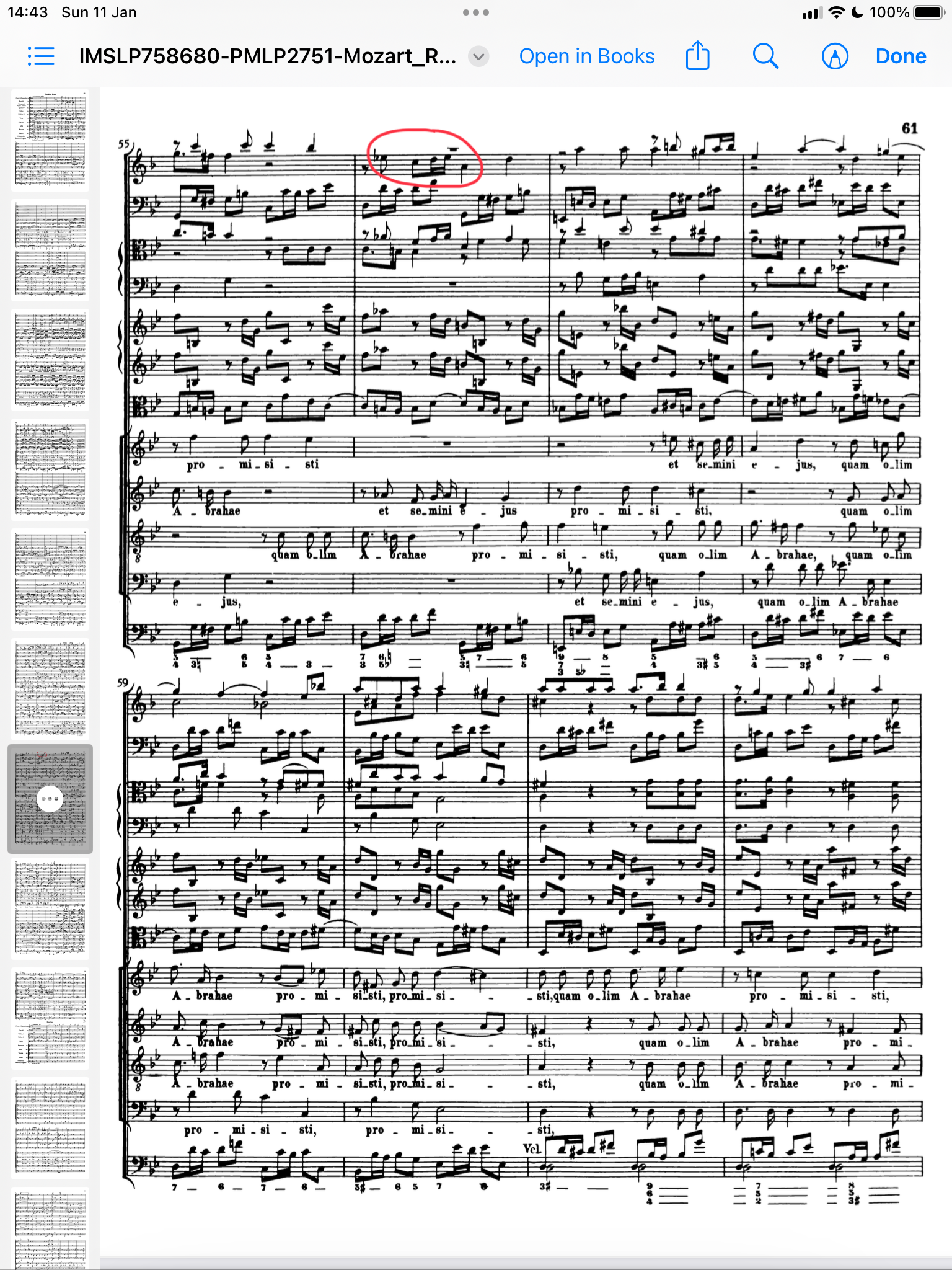
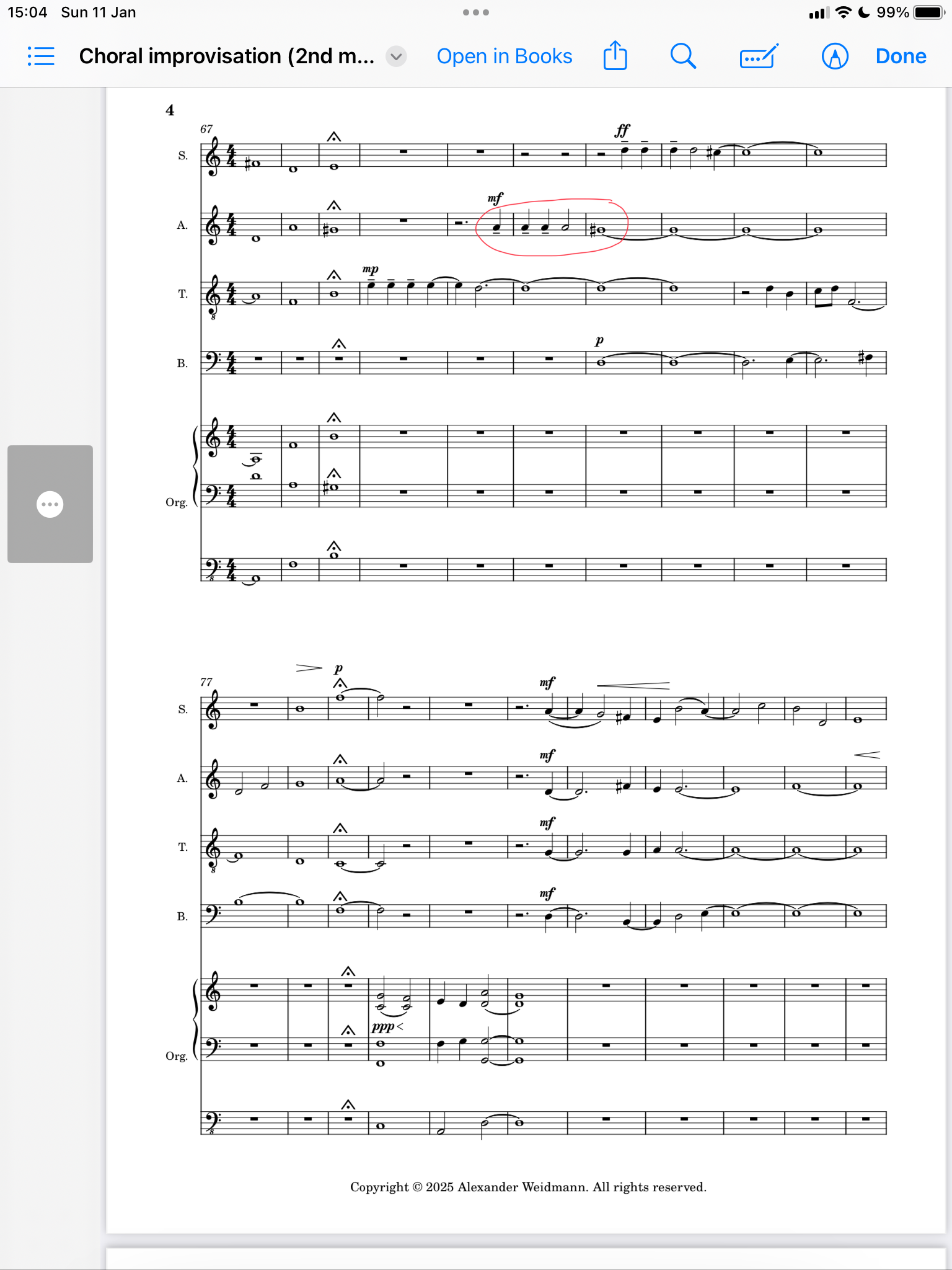
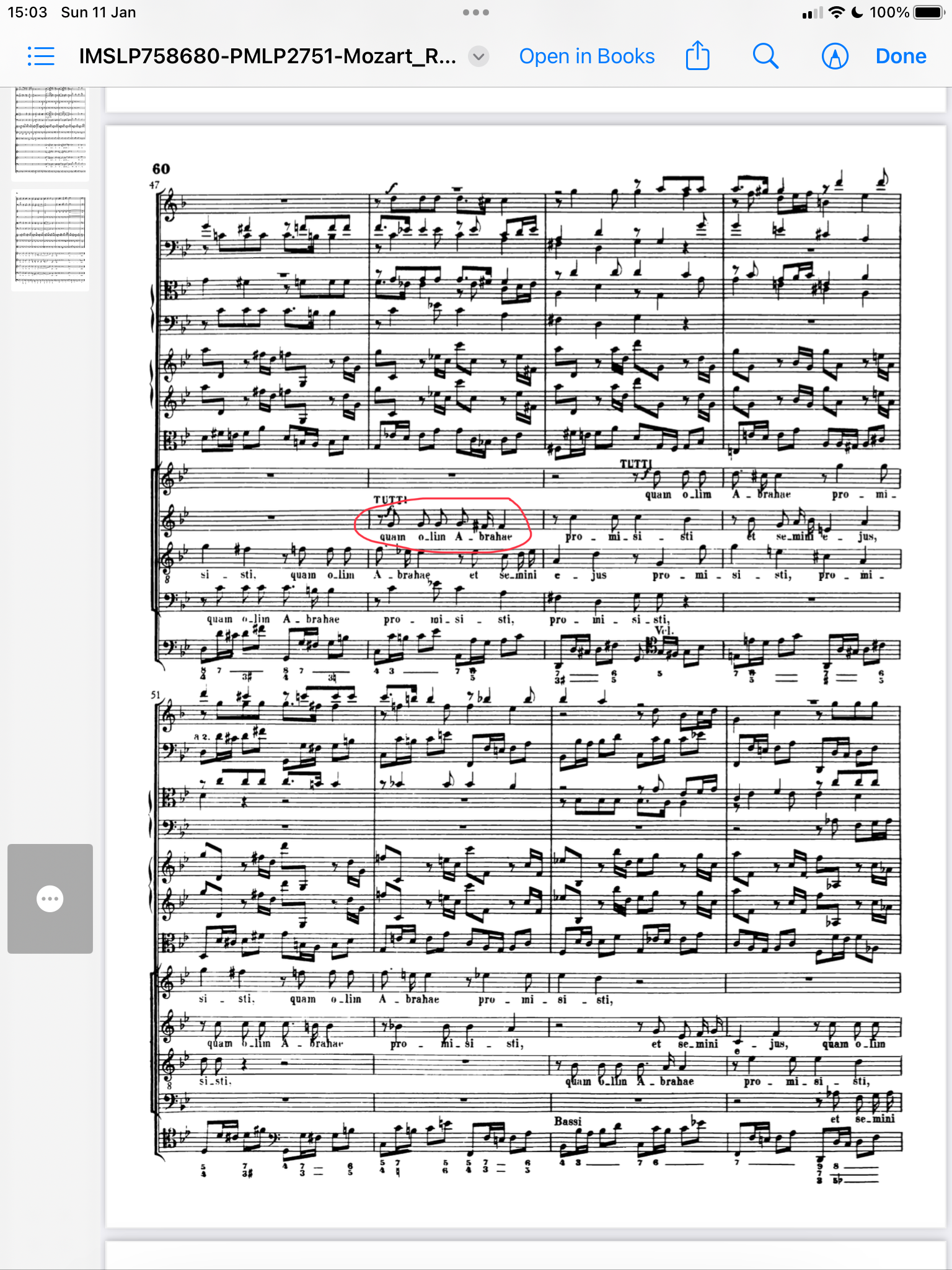
Variations on Mozart/Süssmeyr Requiem
Alex Weidmann replied to Alex Weidmann's topic in Choral, Vocal
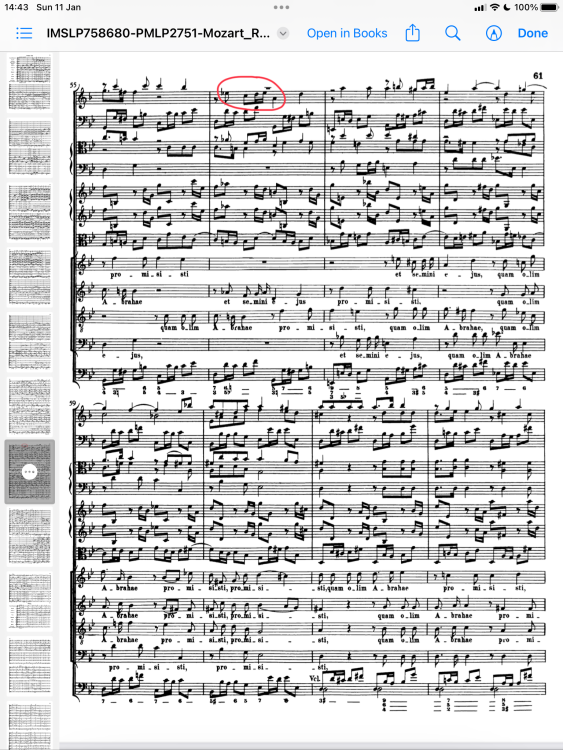
Hi Henry. The quotations are very subtle and fragmentary. E.g. These two quotes from the Domine Jesu. I was aiming for a deconstruction of the Requiem: so I only used a few fragments, rather than quoting long passages.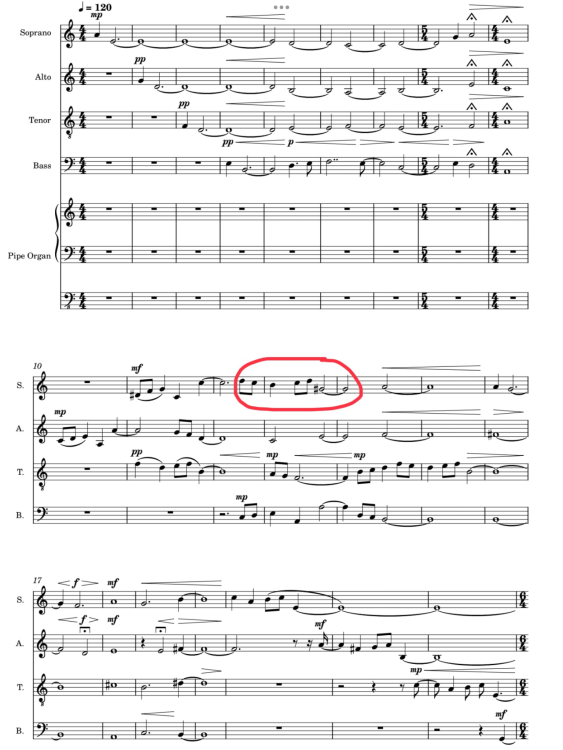
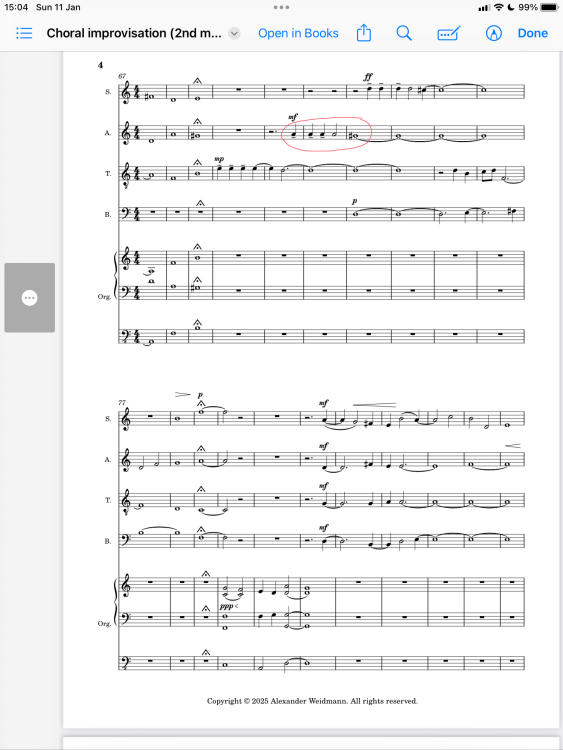
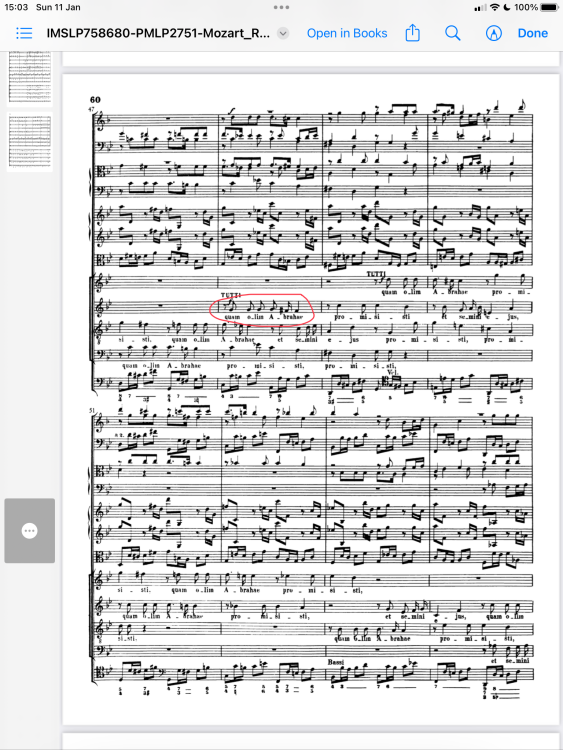
-
I think keeping it is ok, though not necessary because only the cello and later viola would need the accidentals!
-

Trastorno Obsesivo Compulsivo
sebastian Pafundo replied to sebastian Pafundo's topic in Chamber Music
Ohh haha the Paavola translators fail! -
I love that my name "Pyry" has been translated in the message you quote to "Piria"😅😂. But yes! I just woke up but I might send you a private message soon regarding the techniques! I will be following your work very closely!!! You have earned yourself a fan -Pyry
-
Attached is a blog where I have published several essays. Some are related to music, and others may not be of interest to you: Multidimensional Transmission Matrix, Musical Anarchism, Musical Improvisation as a Semiotic Process: A Peircean Reading of American Ciphers, Some Resources Using Escriabin's Mystic Chord, Some Scribbles and Writings of Traditional and Modern Techniques for the Electric Bass, Short Analysis and Essay on Karlheinz Stokhausen's "Studie I", Johann Sebastian Bach and Transcendental Aesthetics, Three Movements of Musical Thought: Thesis, Antithesis, and Synthesis (Three Works, One Concert), Origins of Jazz in Argentina, A Brief Encounter Between Some Eastern Philosophies and Contemporary Music, Archetypal Improvisation: Musical Semiosis Based on Jung, Tarot, Peirce, and Synchronicity. ©Sebastián Ernesto Pafundo. All rights reserved. https://sebastianpafu.blogspot.com/2020/06/soundcloud.html


.thumb.jpg.a1bd070fa88caa1c83527ffe77c97a41.jpg)